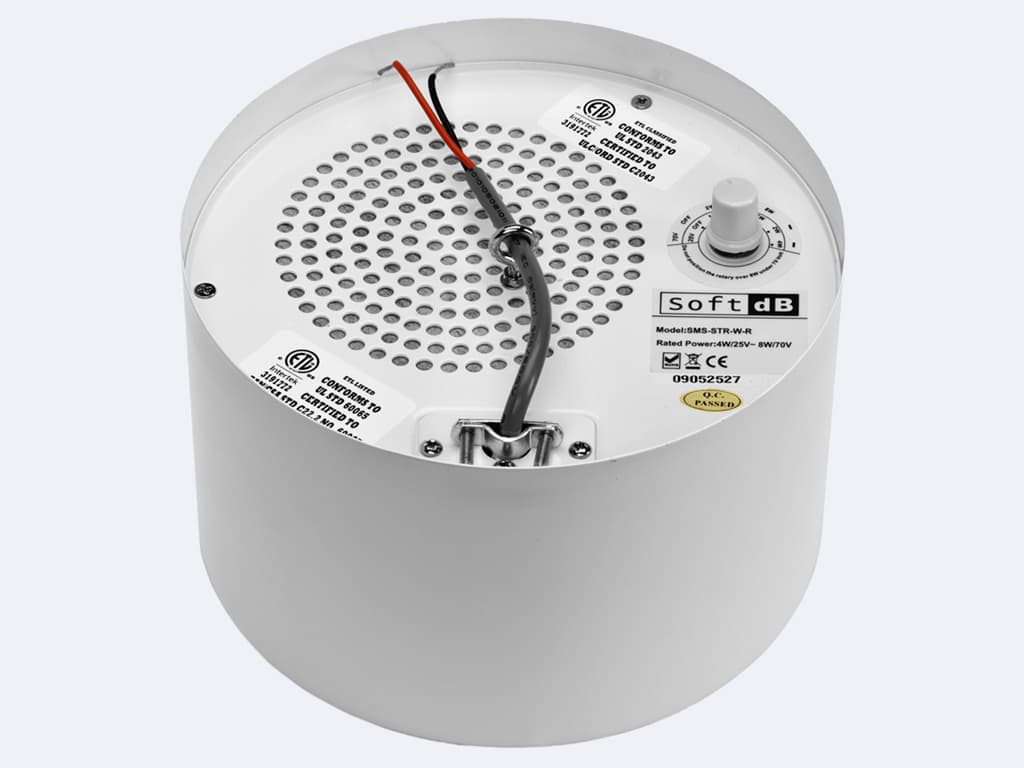
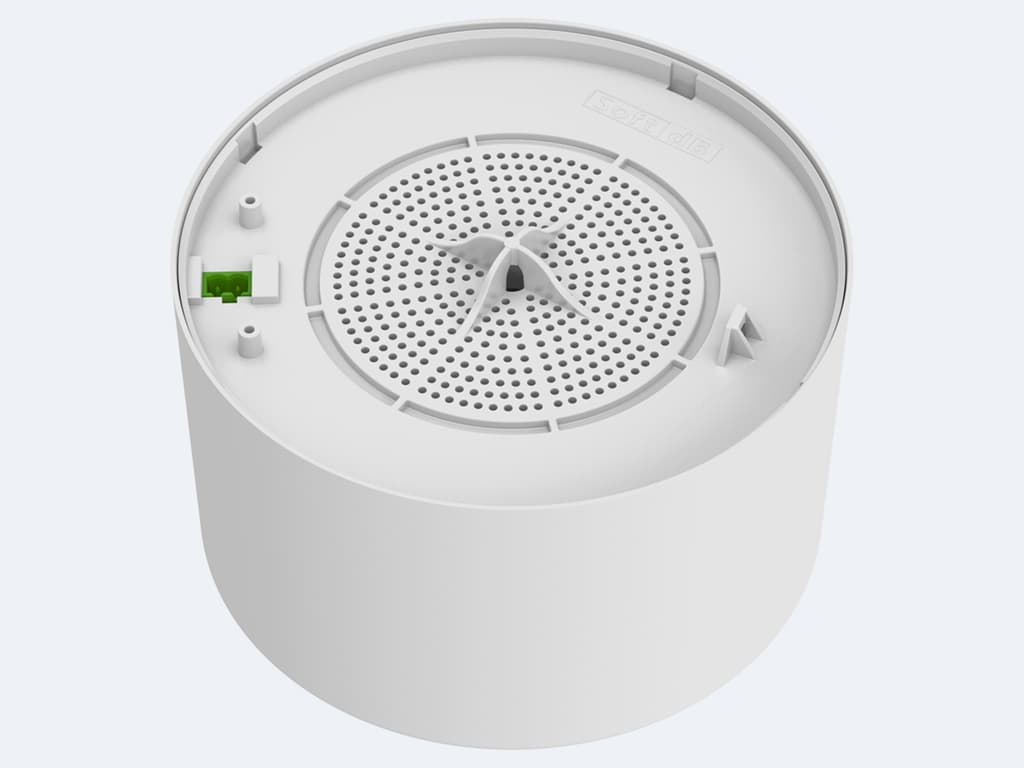
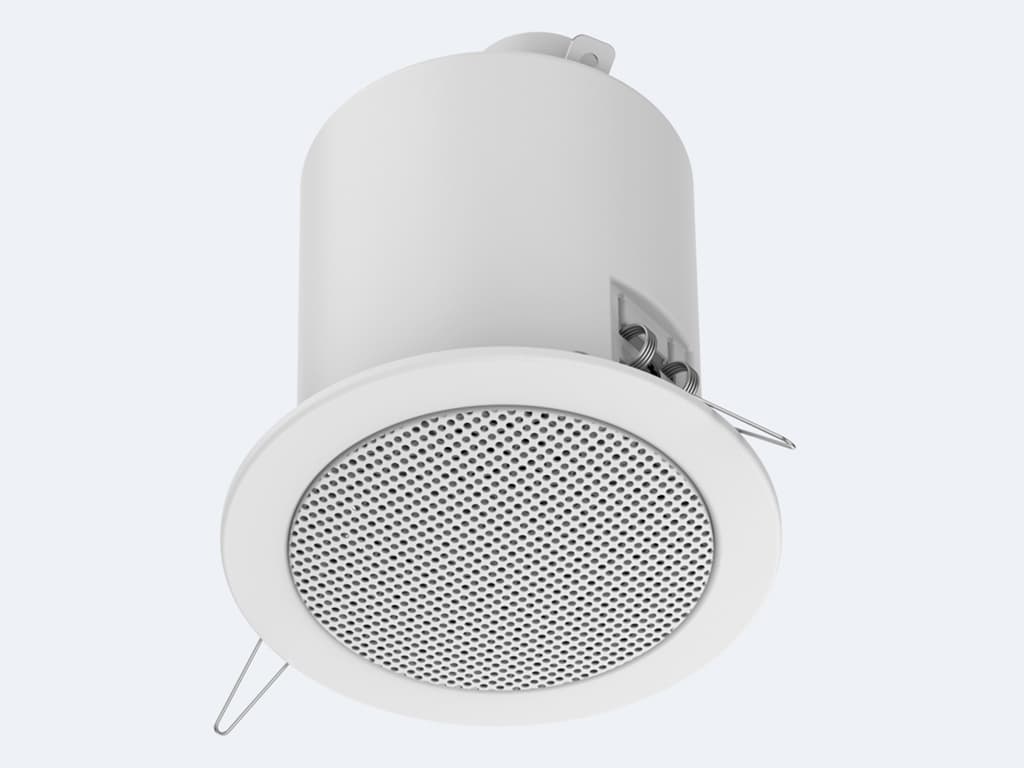
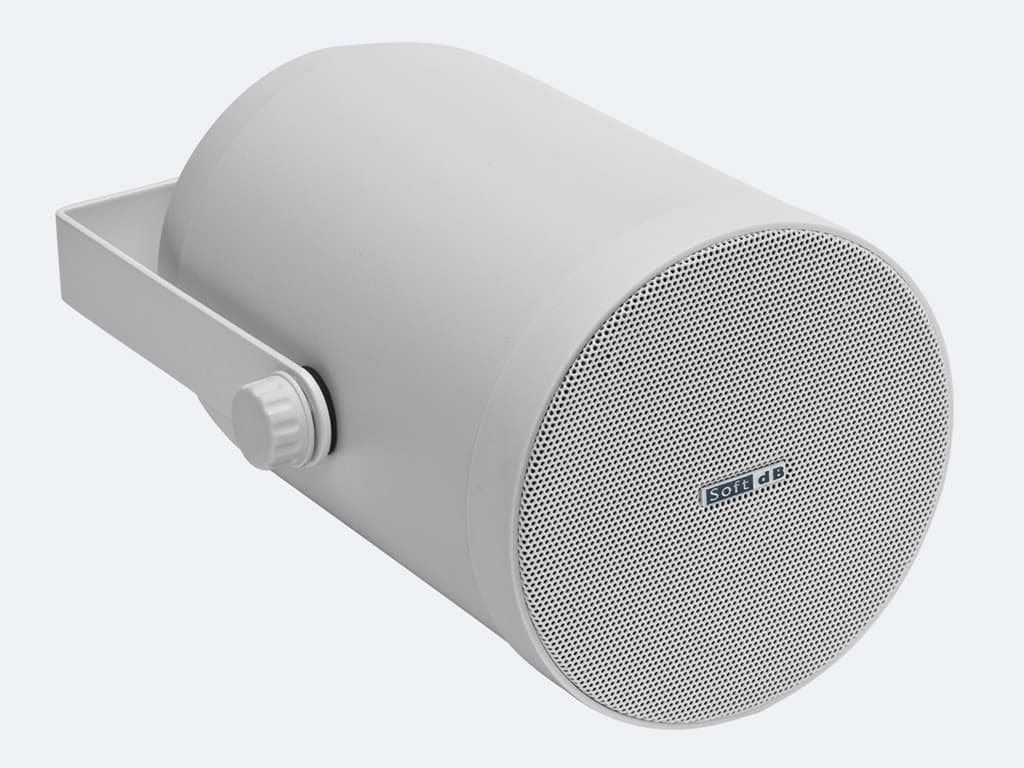
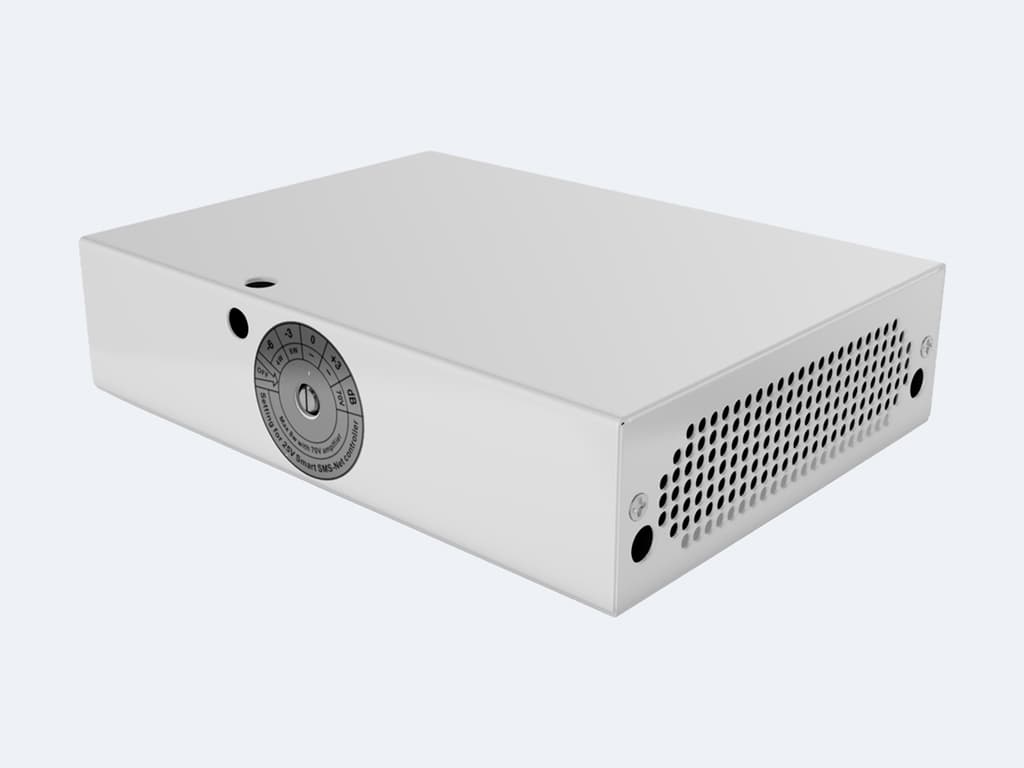
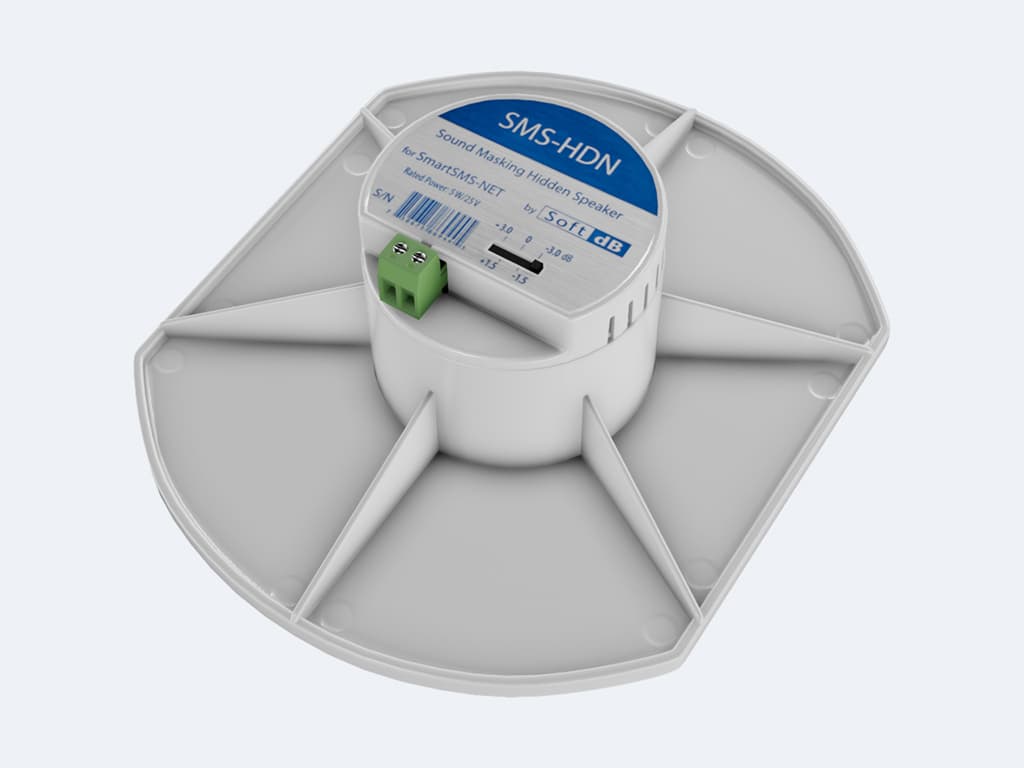
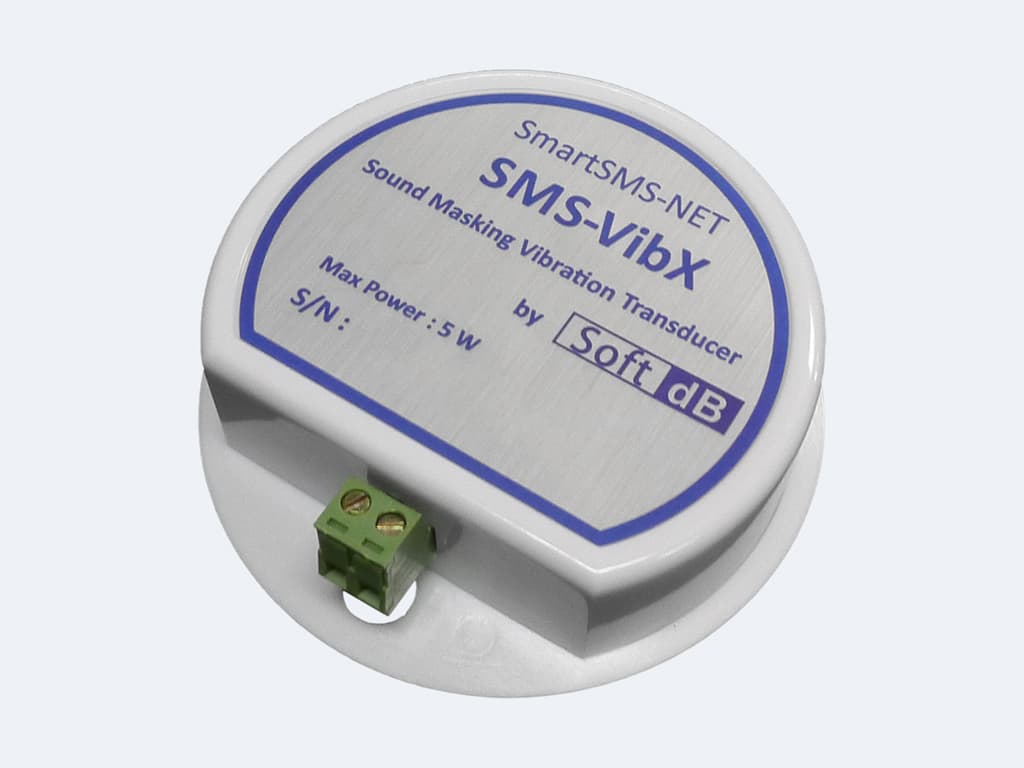
The RL96 is a powerful multizone sound masking generator, 8-channel mixer, equalizer and amplifier in one 1U rack unit. Each channel drives up to 12 Soft dB sound masking speakers and has its own masking, paging and background music levels, EQ and volume schedule. One controller covers about 20,000 sq ft and many units can be networked together to cover larger floors or multi-story projects.
Two things set it apart on the job. At commissioning, the controller measures each zone and sets its EQ to the target spectrum itself, in under two minutes per zone. After move-in, each zone follows a day-by-day, hour-by-hour schedule set in Project Manager or, with optional ceiling sensors, adapts on its own to the actual noise on the floor.
8 amplified zone outputs, up to 12 speakers each, wired in parallel
8 inputs: 4 for adaptive volume control sensors, 4 switchable between sensors and line-level paging or background music
Paging priority: input 1 can lower masking and music during announcements
Fire alarm mute: a contact closure from the fire alarm relay silences every output
Set up in Project Manager Software over USB, Ethernet or Wi-Fi; day-to-day control from the touchscreen, SMS-LINK, Crestron integration or Project Manager Software
24 VDC power supply included. Made in Canada, TAA compliant
8
amplified zones, each with its own levels, EQ and schedule
96
speakers per controller, up to 12 per zone
20,000sq ft
typical coverage per controller, at about 210 sq ft per speaker
Calibrate a zone in under two minutes. Ceilings, walls and furniture all color the sound that reaches people's ears. Instead of tuning sliders by ear, the controller measures the masking in the room and sets that zone's equalizer to the target spectrum. Every zone lands on the same specified curve, regardless of acoustic properties unique to each zone.
Masking that follows the floor. An optional step up from the built-in schedule. Ceiling sensors track how much speech stands out above the background, and the controller nudges that zone's masking volume, slowly and within set limits. A busy floor means slightly louder sound masking while a quiet floor means slightly quieter sound masking.
It is not a volume knob wired to a microphone. The controller never chases the loudness of the room. It measures how much speech stands out above the steady background, and nudges the masking, slowly and within fixed limits, until it doesn't. Zones without sensors simply follow their schedule.
MeasureCeiling sensors in each zone measure the sound level continuously. A 200 to 3,000 Hz voice filter keeps the focus on human speech.
CompareEvery 15 seconds, the controller compares the speech peaks (L10) with the steady background (L95). The gap between them is what distracts people.
AdjustA wide gap means an active floor: masking rises a little. A narrow gap means a quiet floor: masking eases back. By default it moves no more than 0.5 dB per 15 seconds.
Quiet floor. Speech barely rises above the background, so the masking eases down toward its lower limit.Busy floor. Voices stand out, so the masking rises. That lifts the background, the gap closes, and the increase stops.
Schematic illustration. Typical limits are 42 to 45 dBA, set per zone. Default settings were tuned on more than 500 installations and generally need no adjustment.
Up to 50% more comfort
Better acoustic comfort than a fixed timer level on moderately busy days, with near-identical speech privacy.Soft dB field measurements, NOISE-CON 2017
Tested independently
On real office floors over two to three months: less distraction from speech, better short-term mental health ratings, less headphone use.Eindhoven University of Technology, Applied Acoustics, 2024
Claims You May Have Heard
Claim"People talk louder, the masking gets louder, and it spirals."
Added masking raises the background, which narrows the gap being measured, so the increase stops. Each zone also has hard limits: never more than +3 dB or −7 dB.
Claim"You can hear the volume going up and down."
By default it moves at most 0.5 dB every 15 seconds. A full 3 dB change takes a minute and a half, too slow for people to notice.
Claim"A door slam or a burst of laughter sets it off."
It works on 15-second level statistics, not on instantaneous loudness. Only sustained activity moves the masking, never a sudden noise.
Claim"It turns up every time the ventilation kicks in."
A voice filter keeps it focused on speech. When steady building noise rises, the system actually turns its own output down.
Claim"One loud team raises the masking for the whole floor."
Each zone has its own sensors and adapts on its own. If one area gets busy, the masking rises there and nowhere else.
Claim"A timer does the same job."
A schedule suits predictable days, and the RL96 offers both. Adaptive earns its place where activity changes from hour to hour and zone to zone.
Fire alarmContact-closure input. When the fire alarm relay (COM / N.O.) closes, every output mutes. Up to 3 RL96 units per relay contact; observe polarity.
Paging and musicUp to 4 line-level mono inputs (±2 V), mixed and equalized per zone. Input 1 can lower masking and music during a page.
Speaker wiring18 AWG 2-conductor plenum cable (18/2 FT4), speakers in parallel. 12 speakers per zone; 6 for SMS-HDN and SMS-VIBX.
Sensors and knobsOptional. 22 AWG shielded cable, up to 6 ceiling sensors per input, plus 2 inputs for wall-mounted volume knobs.
ControlFront touchscreen with passcode. Project Manager on Windows. SMS-LINK for browser control and a Web API. Crestron 3-Series module over TCP/IP.
NetworkEthernet with DHCP or static IP, Wi-Fi that can be disabled, or USB. The system keeps running with no network connection.
Power24 VDC power supply included, 150 W max. Low-power mode on a daily schedule.
ProcurementDesigned in Quebec City and manufactured in Canada. TAA compliant. 5-year warranty.
It lives in a rack in the electrical room. Day to day, the system is run from a desk: in Project Manager on a PC, or through SMS-LINK from any browser. The touchscreen is there for whoever happens to be standing in front of the rack.
PC software
Project Manager
Place controllers, speakers, zones and wiring right on the office floor plan
Calibrate and set up the whole system
Run periodic monitoring and self-diagnosis, including the RL96's 24/7 system diagnosis
Switch to a simple control panel for end users
Learn moreControl panel + browser interface
SMS-LINK
A web interface for phones and computers, with nothing to install
A 7" capacitive touchscreen for a wall, a desk or a rack
Masking ±10 dB around the calibrated level and music over a 30 dB range, zone by zone
A Web API for building management system integration
Password access, Ethernet or Wi-Fi, powered by PoE or USB
From system design guidelines to installation manuals and technical drawings, our documentation gives specifiers, integrators, and facility teams everything they need to deploy Soft dB sound masking correctly.
Adaptive Sound Masking Beats Static, Timer-Based Systems
Traditional systems raise and lower masking on a fixed timer, guessing at how busy a space will be. Adaptive sound masking measures the real ambient noise and adjusts continuously, so speech privacy and comfort stay consistent whether the floor is packed or empty, with no one touching a dial.