Railway Noise & Vibration Consulting
Rail infrastructure is expanding across North America and so is the noise and vibration that comes with it. Whether you're developing a residential project near an existing rail corridor or working on a new transit network, we give you the acoustical and vibration expertise to navigate every challenge, from preliminary impact studies to real-time monitoring and mitigation strategies.
Contact our expertsRailway Noise and Vibration: A Challenge in Urban Environments
The expansion of light rail transit, commuter rail, and high-speed rail projects across Canada and the United States is transforming the built environment at an unprecedented pace. For residential developers, urban planners, and transit authorities alike, this rapid growth brings a common challenge: managing the noise and vibration generated by rail operations before they become a problem for the communities around them.
Rail-generated noise and vibration are not just nuisances, they are measurable environmental impacts subject to strict regulations and increasingly scrutinized by municipal authorities and future residents. A new transit viaduct running past a residential building. A high-speed corridor slicing through a developing neighbourhood. A light rail extension stopping just steps from a school or hospital. In each of these scenarios, getting the acoustics and vibration assessment right and early is what separates a smooth project from a costly one.
The good news: most railway noise and vibration problems are entirely manageable when you have the right expertise and the right instrumentation on your side. Whether it's acting on the propagation path between the rail source and the sensitive receiver, or reinforcing a building's envelope against structure-borne noise, there are proven, cost-effective solutions, provided you know exactly what you're dealing with. That's precisely where we come in.
From Measurement to Mitigation: A Complete, Turnkey Expertise
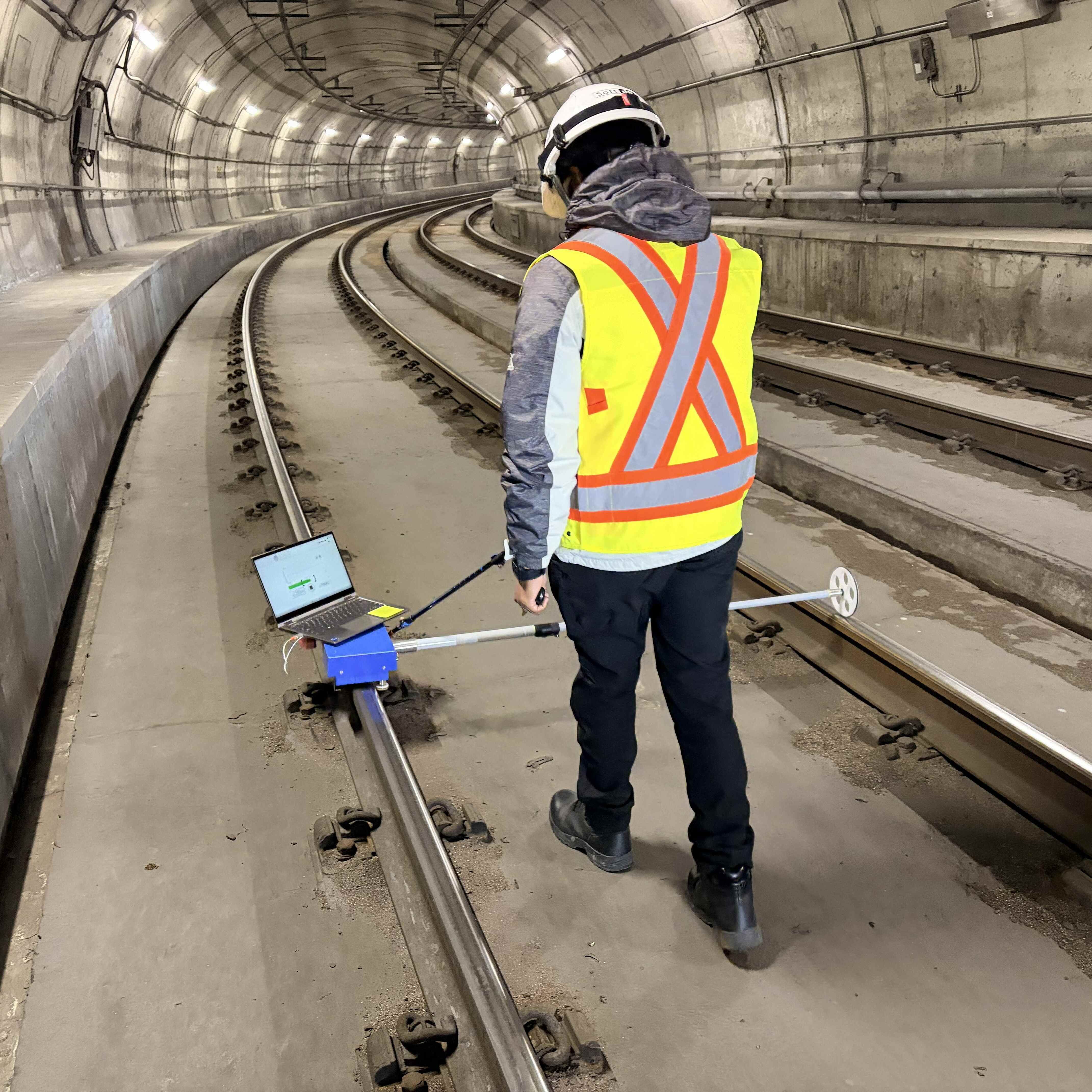
Rail Corrugation & Roughness Measurements
Wheel-rail interaction is one of the dominant sources of noise and vibration along rail corridors, and rail surface roughness is a key factor driving that interaction. Using specialized rail roughness measurement instrumentation, our engineers physically survey the rail surface to detect irregularities, corrugations, and defects that amplify noise and vibration at the source. This type of precision instrumentation is rare in North America, making our rail roughness assessment capability a genuine differentiator for clients across Canada and the United States.
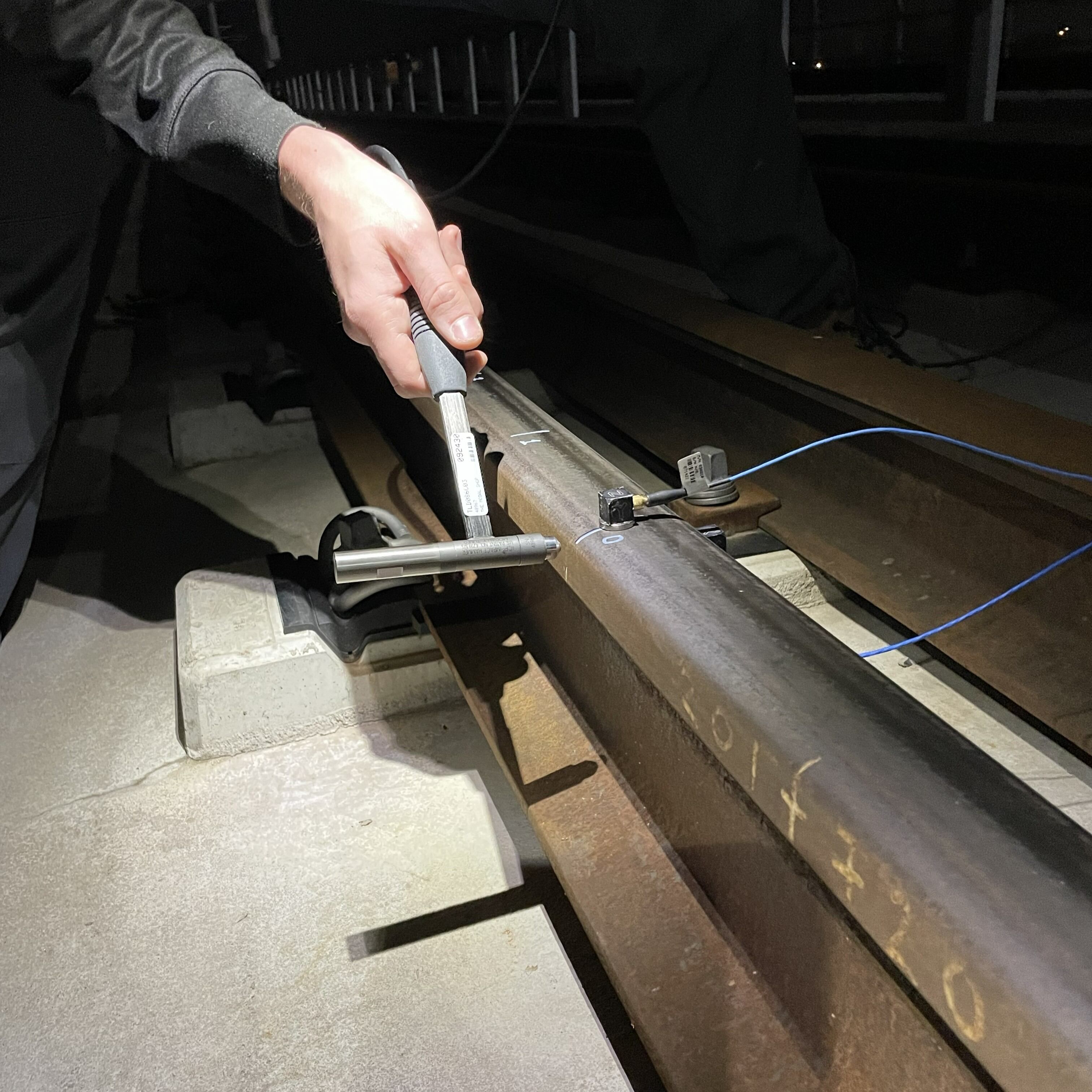
Track Decay Rate & Impact Measurements
Understanding how vibration energy dissipates along a rail and into the surrounding ground is critical to predicting how much of it will reach nearby buildings. Our engineers conduct track decay rate measurements using an instrumented hammer and accelerometers placed at controlled distances along the rail. We also perform ground impact measurements between the rails to quantify how vibration energy propagates laterally from the track, giving us the data needed to model and predict the real-world vibration impact of train passages on adjacent structures.
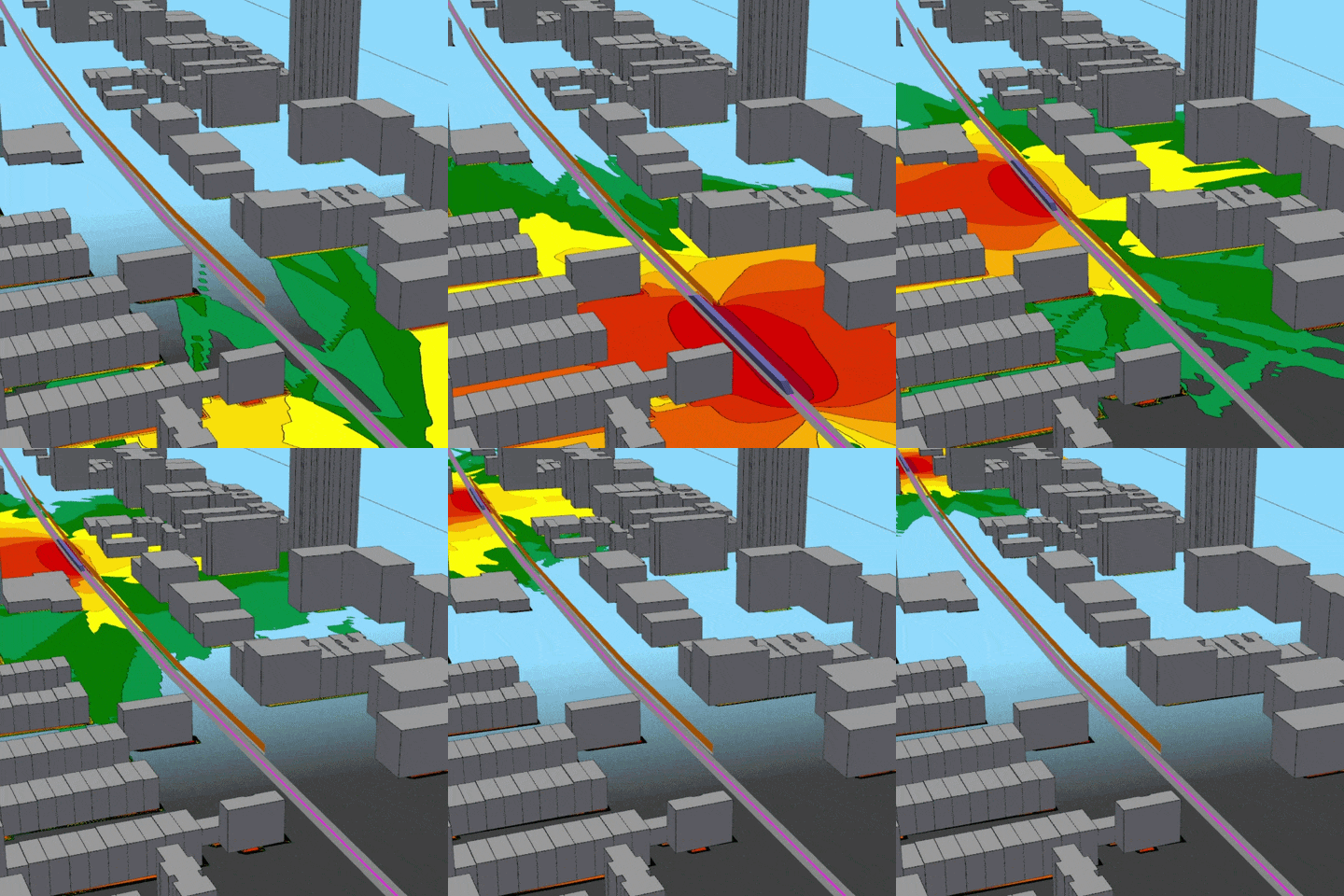
Noise Level Measurements & Acoustic Modeling
Measuring the actual noise generated by train passages, such as wheel noise, aerodynamic noise and braking noise, is the foundation of any credible railway acoustic impact study. Our team uses precision microphones and sound level meters to capture accurate noise data in the field, which then feeds into our acoustic modeling workflow. Using SoundPLAN software, we can simulate moving train sources along a rail corridor and generate dynamic noise maps that visualize how sound propagates through the environment as a train passes, a powerful tool for communicating impact to stakeholders and evaluating mitigation scenarios.
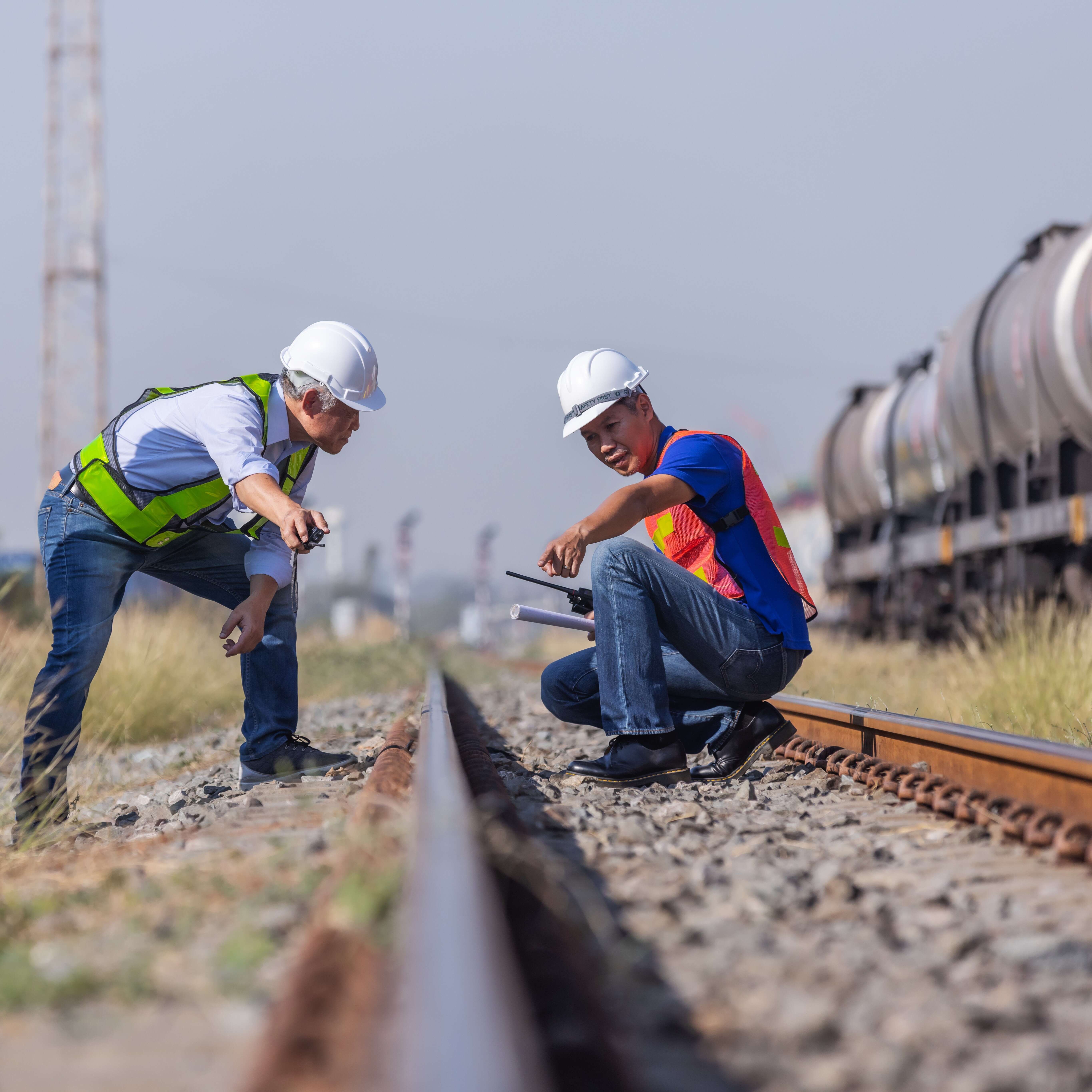
Vibration Control Strategies
When railway vibration poses a risk to nearby buildings or their occupants, the most effective interventions are typically applied along the propagation path rather than directly at the rail source. Our engineers evaluate mitigation options such as open or in-filled trenches between the track and the sensitive receiver, as well as foundation-level isolation solutions for new developments in the planning stage. By combining field measurements with predictive modeling, we identify the most efficient mitigation approach for each project before construction begins, when changes are still easy and affordable to implement.
Need Expert Assistance with Rail Corrugation & Roughness Measurements?
Soft dB is one of the only acoustics and vibration consulting firm in North America using RailTechnology's specialized rail corrugation and roughness measurement cart CAT Trolley.
Get a tailored quote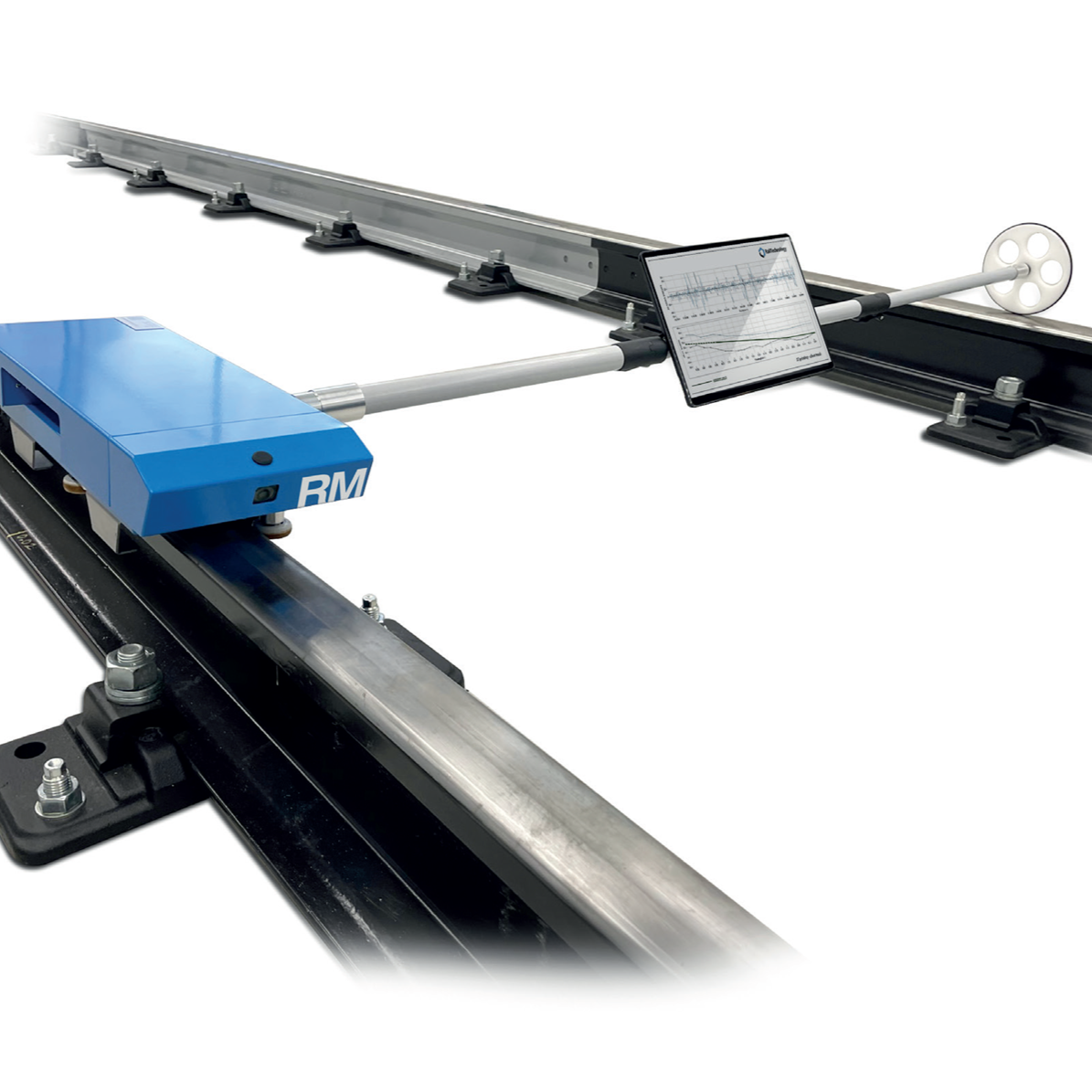
Soft dB's Professional Railway Acoustics & Vibration Services
- Preliminary railway noise and vibration impact assessments for residential and mixed-use developments near rail corridors;
- Rail roughness surveys using specialized measurement cart instrumentation;
- Track decay rate and ground impact measurements to characterize vibration propagation;
- Noise level measurements during train passages (pass-by noise assessments);
- Acoustic and vibration modeling using SoundPLAN, including animated noise propagation simulations;
- Evaluation and comparison of noise barrier and vibration mitigation strategies;
- Building envelope acoustic assessment (STC, facade transmission loss) relative to rail noise exposure;
- Real-time and continuous noise and vibration monitoring along rail corridors;
- Expert support for regulatory submissions and environmental assessments;
- Peer review of railway noise and vibration studies produced by third parties.

Railway Projects We've Contributed To
Our acoustical engineers have been involved in railway noise and vibration projects across Canada, working with developers, operators, and regulatory stakeholders on some of the country's most prominent transit initiatives.

Metrolinx Eglinton Crosstown LRT — Toronto, ON
Assessment of noise and vibration impacts from a planned Metrolinx rail viaduct on an adjacent occupied building, including background noise measurements, building envelope STC evaluation, and noise barrier effectiveness analysis. Our team built upon an existing impact study to deliver targeted recommendations for protecting the building's occupants from the projected increase in rail noise exposure.
Réseau express métropolitain (REM) — Montréal, QC
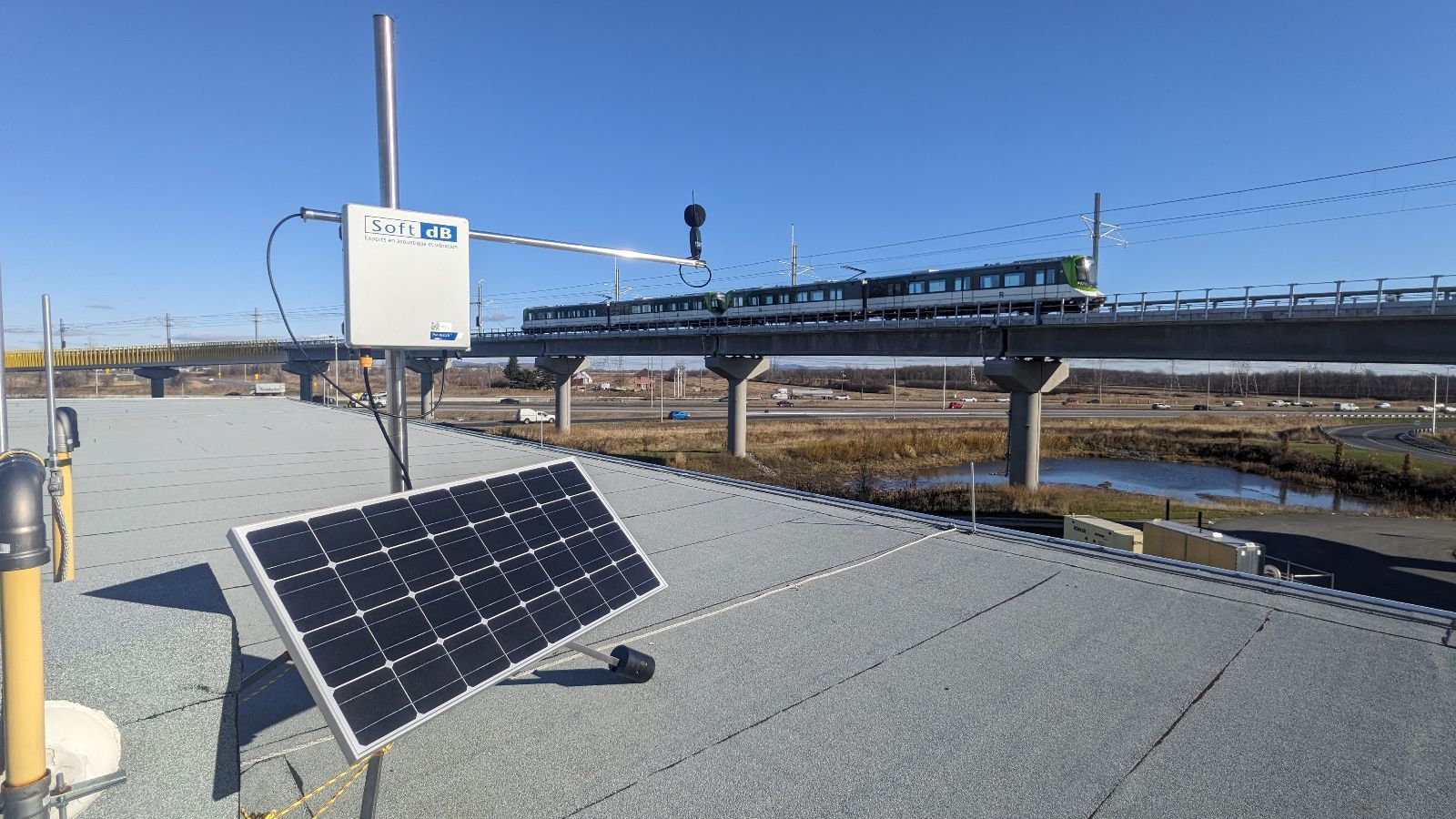
Noise and vibration measurements and assessments in support of one of the largest light rail transit projects in Canadian history. Our engineers conducted a broad scope of field measurements along the REM corridor, contributing technical data and analysis to help characterize the project's acoustical and vibration footprint on surrounding communities.
Rigorous Science. Rare Instrumentation. End-to-End Support.
What sets our railway acoustics practice apart isn't any single service, it's the combination of field measurement rigor, specialized instrumentation, and the ability to support clients at every stage of a project. Our rail roughness measurement cart is among a handful available to consultants in North America, which is why clients from across Canada and the United States seek us out for this specific capability. But instrumentation is only part of the story.
Our engineers bring the same depth of expertise to railway projects as they do to any of our other acoustical specialties: methodical measurement protocols, validated acoustic and vibration modeling, and clear, actionable recommendations that hold up to regulatory scrutiny. We don't just hand you a report, we help you understand what the data means, what your options are, and how to act on them effectively.
As light rail networks expand and high-speed rail projects between major Canadian cities move forward, the demand for credible railway noise and vibration expertise will only grow. We're building that expertise project by project, with the instrumentation, the methodology, and the multidisciplinary team to back it up.
Whatever stage your rail project is at, we're ready to help.
From early-stage impact assessments that shape design decisions to long-term noise and vibration monitoring once trains are running, our team provides the full-spectrum acoustical and vibration support your project needs. Let's make sure rail noise and vibration never derail what you're building.
Contact our experts