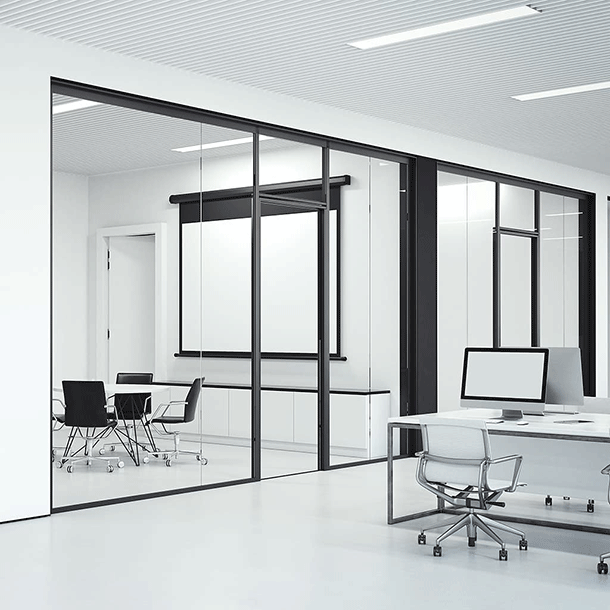
Hospitals have never been quiet, and the data says they keep getting louder. Researchers at Johns Hopkins who reviewed five decades of hospital sound measurements found daytime levels had climbed from 57 dB(A) in 1960 to 72 dB(A) by 2005, with nighttime levels rising on the same curve. Design is pushing in the same direction: open floor plans, decentralized nursing stations, and glass-walled consult rooms trade acoustic separation for flexibility and sightlines. The result is a building working against two goals at once, protecting patient rest and protecting the confidentiality of conversations that now travel farther than the walls used to let them. Neither goal is met by making the hospital quieter, and as it turns out, quieter isn't even on the table.
The Quiet Target Hospitals Can't Hit
The World Health Organization sets the benchmark for patient areas at 35 dB(A) where patients are treated or observed, and 30 dB(A) in ward rooms, with nighttime peaks held under 40 dB(A). Almost nothing in a working hospital comes close. A 2021 systematic review in Environmental Science and Pollution Research pooled noise measurements from hospitals worldwide and found daytime levels ranging from 37 to 88.6 dB(A) and nighttime levels from 38.7 to 68.8 dB(A). A study of five adult ICUs in Critical Care recorded averages that never fell below 45 dB(A), with peaks above 85 dB(A) as often as 16 times an hour overnight. Those authors drew the blunt conclusion the rest of the field tends to avoid: the WHO levels are so low they can't be reached in a functioning ICU short of turning the equipment off.
Noise Spikes & Contrasts Are Worst Than Noise Itself
That conclusion is the useful part. If silence is the standard, every facility fails on paper and the design conversation goes nowhere. The better question isn't how loud a unit runs on average, but which sounds actually reach the patient. A sleep study from Brigham and Women's Hospital in Annals of Internal Medicine tested exactly that: what pulls patients out of sleep isn't the ambient level, it's the intrusion of distinct, intermittent sounds above it. An IV alarm woke roughly 90% of sleepers at just 40 dB(A), and electronic tones proved more disruptive than human voices at the same volume. The thing that wakes people is contrast, the sound that stands out from the background, not the background itself. That shifts what an acoustic strategy is actually for. Not to silence a hospital, which no one has managed, but to control what patients hear, across two requirements that pull in opposite directions.
Patient Privacy Is the Second Front
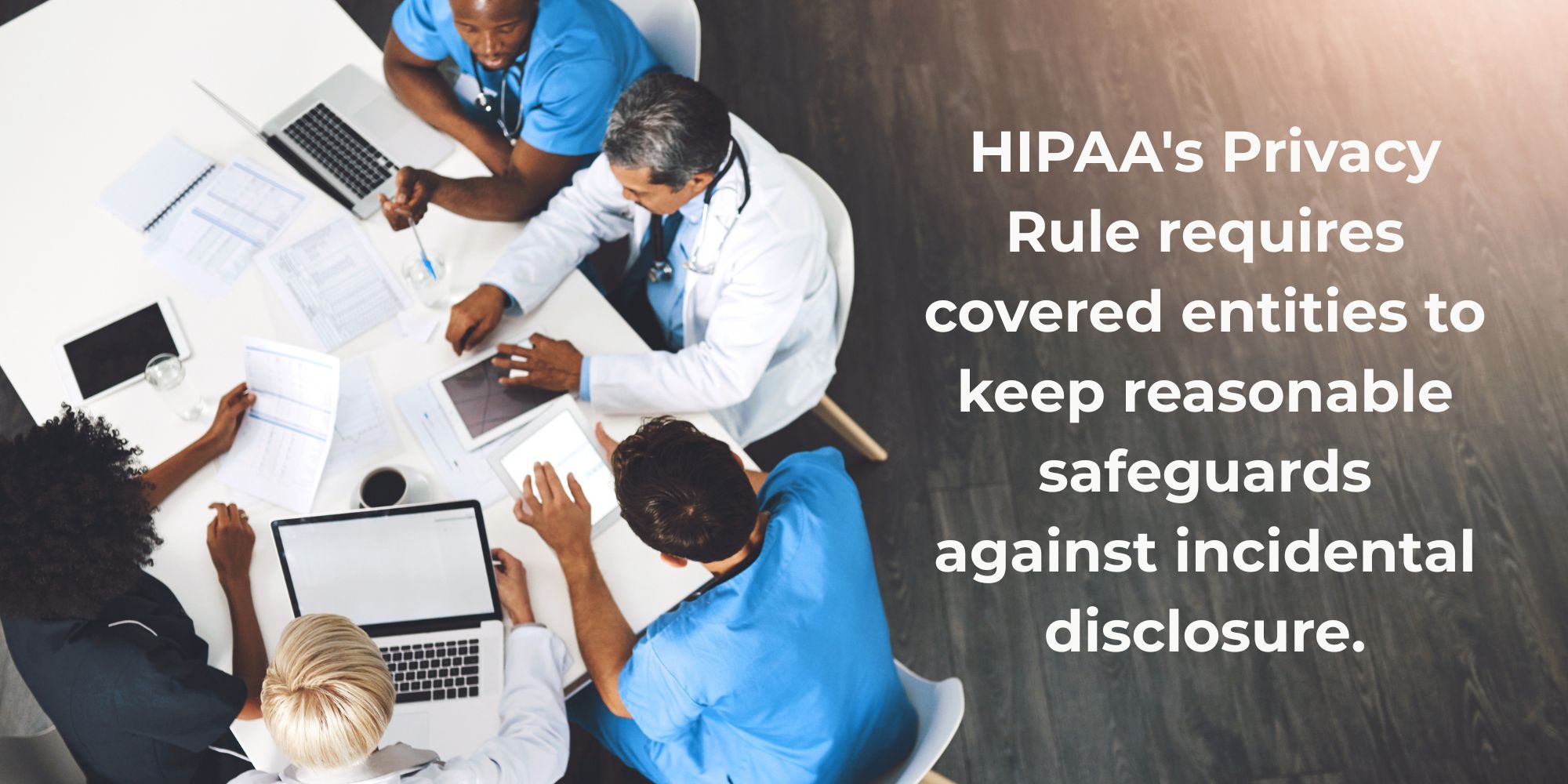
Noise in a hospital does more than disturb rest. It also carries information. The same open layouts that let corridor sound into a patient's room let a patient's details out of it. Decentralized nursing stations, check-in desks in open lobbies, telehealth consults behind glass: each one puts protected health information into the air where a solid wall used to hold it. HIPAA Privacy Rule doesn't forbid a conversation from being overheard. It requires covered entities to keep reasonable safeguards against incidental disclosure, the intake a stranger catches in a waiting room, the medication review audible through a partition, the handoff at a station open to the hallway. Unlike the WHO rest thresholds, the rule attaches no decibel figure to any of this, which is precisely why it's easy to under-build for. Demonstrable speech privacy is one of the ways a facility shows the safeguard is real and not just wording in a manual.
Speech Privacy Can't Rely on Soundproofing Alone
Construction alone runs out of room here. Architectural isolation handles the structural path: the wall, the door, the partition. It does nothing for the speech that leaks through what isolation can't seal, the open plenums, shared air returns, and sightline-driven openings that decentralized design is built around. Sound masking covers that residual path, raising the ambient sound level just enough to make conversations unintelligible to unintended listeners a short distance away. Because that background layer is smooth and steady, it does the job without introducing the kind of sharp, intermittent sound that wakes patients. Isolation and masking work as two layers of one strategy, not as alternatives to each other.
Why Adaptive Sound Masking Wins in Healthcare Settings
Set the two fronts side by side and the conflict is plain. Daytime privacy wants a higher floor, enough to cover speech moving through a busy unit at shift change. Nighttime rest wants that floor eased back toward the 30 dB(A) range, so the masking itself doesn't become one more thing keeping a patient awake. One fixed setting cannot serve both. Tuned for daytime privacy, sound masking will feel too present over a sleeping patient at 3 a.m. Tuned down for nighttime quiet, it'll leave private conversations exposed when the floor is at its busiest.
Adaptive sound masking systems resolve that: systems that read the ambient level continuously and adjust output in real time, lifting as a corridor or station gets loud and settling as the unit quiets overnight. Treat it as a premium add-on and you've missed the point. In a space that runs around the clock under two requirements moving in opposite directions, real-time sound masking volume adjustment is the only approach that holds both at once, and it's the reason effective sound masking in healthcare is a harder challenge than sound masking in open-plan offices, where the day ends at six and privacy is the only goal on the board.
Learn more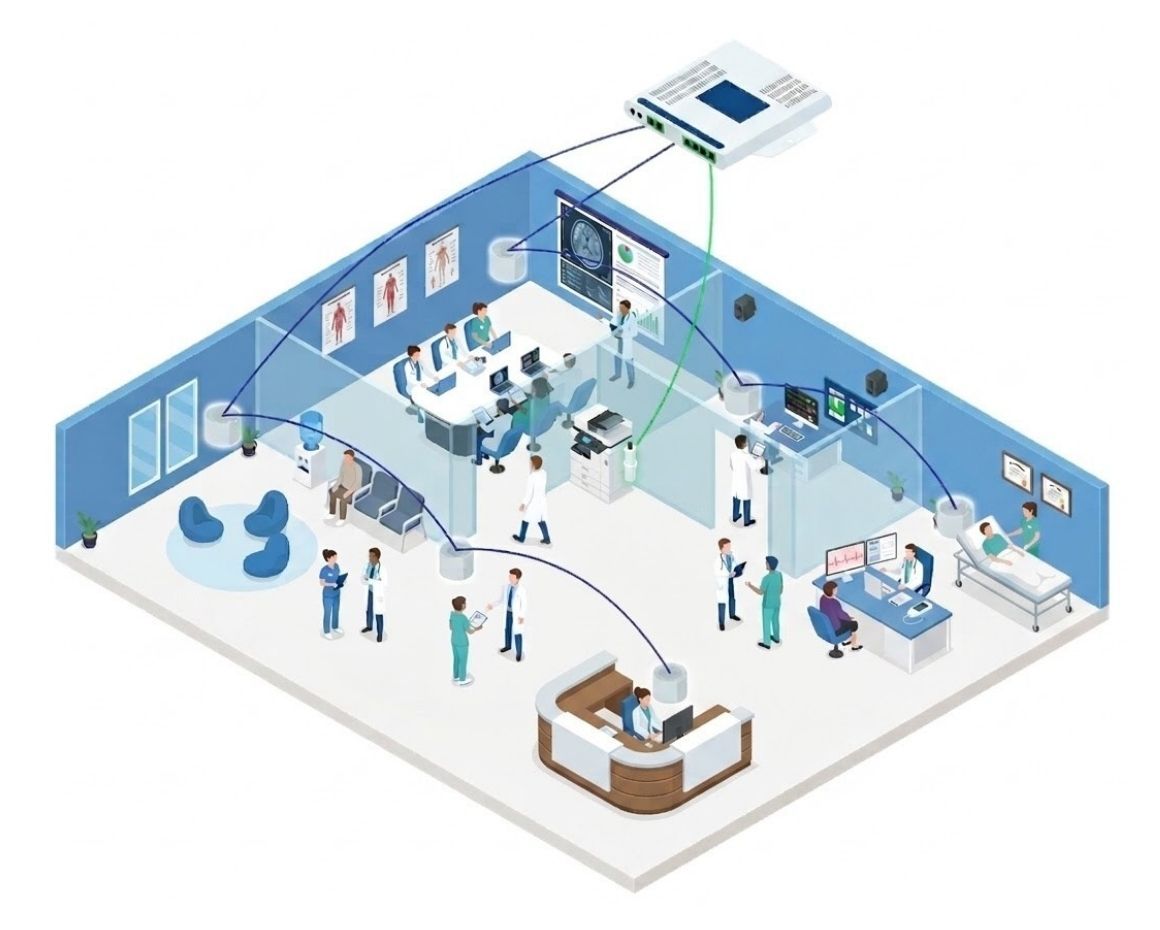
Noise & Speech Privacy, Solved Together
Sound masking raises the ambient sound level to a point that makes private conversations unintelligible beyond a short radius, without silencing the environment or requiring expensive construction and soundproofing work. In healthcare settings specifically, the right sound masking technology:
- Protects patient confidentiality and reduces the risk of accidental PHI disclosure
- Reduces the intrusion of disruptive sound into rest and recovery areas
- Enables flexible, open facility design without giving up acoustic integrity
- Allows for network-driven adjustments and zone-specific settings, adaptable to any care environment
As healthcare design keeps trending toward openness and flexibility, acoustic privacy has to become just as adaptable. Facilities treating sound masking as a fixed, one-time installation are solving yesterday's problem. The ones getting it right build in the flexibility to protect patient rest and patient privacy at the same time, around the clock.
References
- Busch-Vishniac et al., Noise levels in Johns Hopkins Hospital, J. Acoust. Soc. Am. 118(6), 2005. https://doi.org/10.1121/1.2118327
- Vasconcelos et al., Environmental noise in hospitals: a systematic review, Environmental Science and Pollution Research, 2021. https://doi.org/10.1007/s11356-021-13211-2
- Darbyshire & Young, An investigation of sound levels on intensive care units with reference to the WHO guidelines, Critical Care 17(5), 2013. https://doi.org/10.1186/cc12870
- Buxton et al., Sleep Disruption due to Hospital Noises: A Prospective Evaluation, Annals of Internal Medicine 157(3), 2012. https://doi.org/10.7326/0003-4819-156-12-201208070-00472