Sound Masking for Healthcare Facilities
Good Acoustic Privacy & Comfort Mean Better Patient Care
Protect private health information discussed verbally and give patients the acoustic comfort that supports real recovery with adaptive sound masking designed for clinical environments.
Request demoReconciling the Competing Needs for Acoustic Privacy, Patient Comfort, and Efficient Clinical Operations
Busy corridors, thin exam room walls, and open nursing stations create an environment where patient conversations and sensitive medical information carry further than they should. That's not just a comfort issue. In a regulated environment where overheard conversations can constitute accidental PHI disclosure, poor acoustic design can simultaneously become a compliance and patient experience failure. Adaptive sound masking technology is the most cost-effective tool you have to address both at once.
Noise & Privacy, Solved Together
Sound masking technology raises the ambient acoustic floor to an optimal level that renders private conversations unintelligible beyond a certain radius — without silencing the environment or requiring disruptive construction.
- Protects patient confidentiality and reduces accidental PHI disclosure risk
- Improves patient comfort, sleep quality, and perception of care
- Enables flexible facility design without sacrificing acoustic integrity
- Fully adjustable and zone-specific — adaptable to any care environment
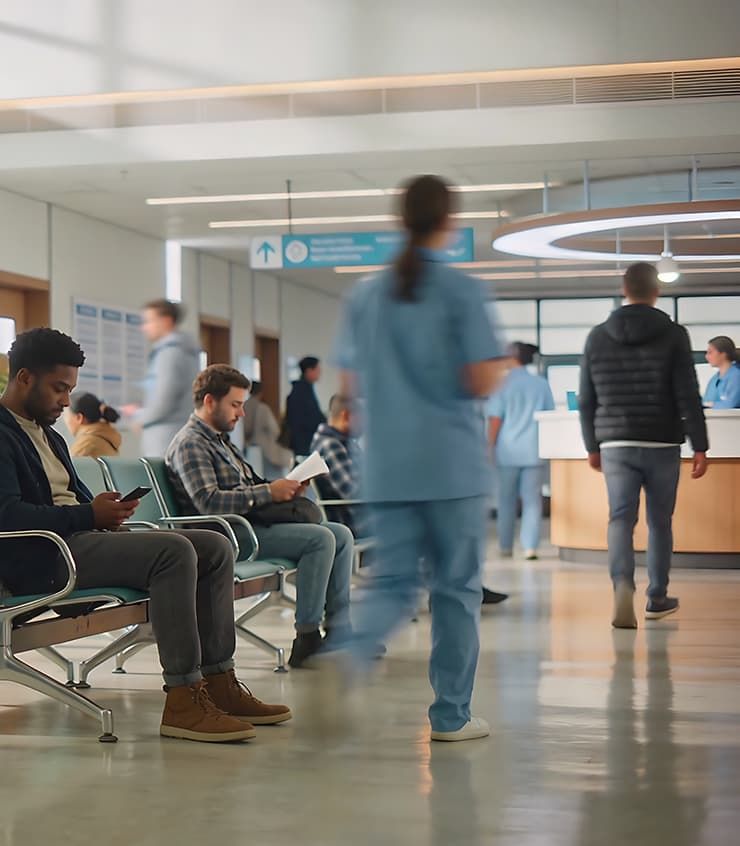
Healthcare Spaces Were Never Designed With Acoustic Privacy and Comfort in Mind
In healthcare, noise isn't just an annoyance. It erodes the privacy patients expect, disrupts the rest their recovery depends on, and adds cognitive load to an already demanding clinical environment.
Privacy Leakage
Conversations in exam rooms and consultation areas are easily overheard from hallways.
Patient Comfort
Patients hesitate to share sensitive symptoms when they feel overheard or exposed.
Sleep Disruption
Constant noise spikes from carts and alarms disrupt essential restorative REM sleep.
Staff Burnout
High ambient noise increases cognitive load, leading to fatigue and medical errors.
Sound Masking is Recommended By Leading Healthcare Institutions and Agencies
Mayo Clinic Research
Evidence published in Sleep Medicine: X confirms that sound masking improves sleep efficiency by over 40%.
FGI Guidelines
Fully aligned with the Facility Guidelines Institute (FGI) standards for outpatient healthcare acoustics.
HIPAA Standards
Adaptive sound masking provides essential safeguards for PHI communicated verbally, preventing accidental privacy breaches.
Sound Masking & HIPAA Compliance
HIPAA's Privacy Rule requires covered entities to implement reasonable administrative, technical, and physical safeguards to limit incidental PHI disclosures. Architectural sound isolation addresses the structural layer. Sound masking addresses what isolation alone can't catch — the residual speech intelligibility that carries through gaps, plenums, and open corridors. Together, they form a defensible, layered acoustic strategy.
Adaptive Acoustic Technology
Sound Masking Designed for the Reality of Healthcare Environments
A hospital at 2 PM and a hospital at 2 AM are acoustically two very different spaces. Soft dB's adaptive sound masking system automatically adjusts to the actual noise levels of your environment around the clock. Patients get the quiet neutral soundscape they need to rest. Staff keep the workflow they need to operate. Sensitive private conversations are kept unintelligible for unintended listeners. This is sound masking that follows the actual rhythm of a healthcare space, supporting patient recovery and privacy without drawing attention to itself.
Automated sound masking volume adjustments based on speech privacy levels required
Optimal Privacy & Comfort at All Times
Our smart speech privacy system adjusts its masking volume in real-time based on the ambient noise and activity levels of your environment.
- During busy periods, the masking increases subtly to maintain acoustic privacy when needed most.
- During quiet periods, it lowers automatically to stay perfectly comfortable and unnoticeable.
Sound masking will never be too loud or too quiet—it will always feel just right for optimal acoustic privacy.
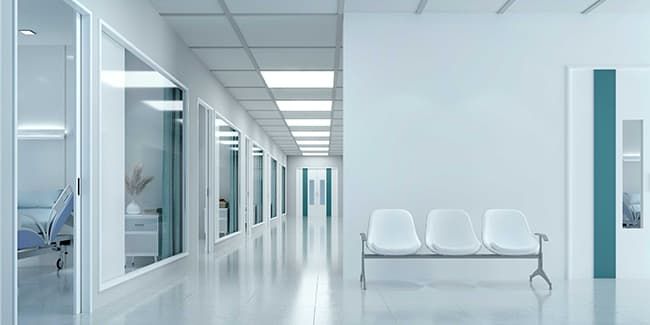
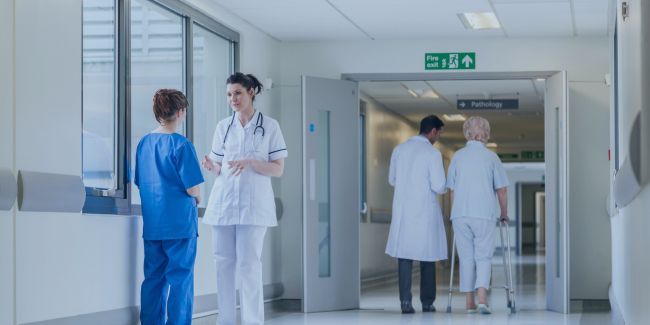
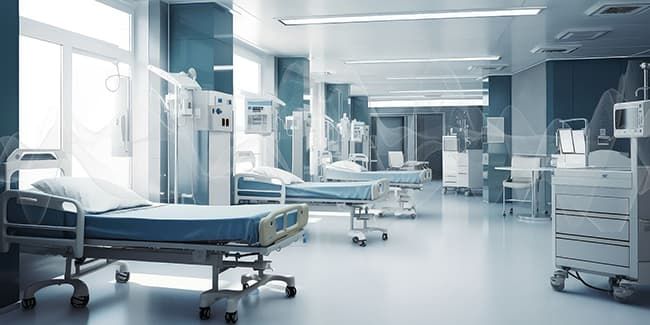
Better Acoustic Privacy Across All Types of Healthcare Settings
Tailored patient privacy solutions that scale from private practices to multi-campus hospitals.
Clinical research
Sound Masking Impact on Patient Sleep Quality
Three independent peer-reviewed studies confirm that integrating sound masking technology is the most effective intervention for improving patient sleep quality — outperforming even sound absorption treatment.
42.7%
Improvement in ICU patient sleep
Xie, Kang & Mills — NCBI
11% vs 22%
Sleep arousals: with vs. without masking
Shaikh et al. — Sleep, 2020
103 dBA
Peak nighttime noise in ICUs
Xie, Kang & Mills — NCBI
ICU sleep quality
Sound masking significantly improves sleep quality of intensive care unit patients
Xie, H., Kang, J., Mills, G. H. — Critical Care, NCBI
42.7%
Improvement in ICU patient sleep — the largest effect of any acoustic intervention tested, including sound absorption.
Mechanical ventilation weaning
Sound masking decreases noise-induced sleep disturbance for patients weaned off prolonged mechanical ventilation
Shaikh, H., Chung, P., Jubran, A., Tobin, M., Laghi, F. — Sleep, Vol. 43, Supplement 1, 2020
11% vs 22%
Percentage of sound events causing arousal or awakening — with vs. without masking — measured by overnight polysomnography.
Coronary care units
White noise improves patient sleep quality in coronary care units
Farokhnezhad Afshar P., Bahramnezhad F., Asgari P., Shiri M. — Journal of Caring Sciences, 5(2), 2016
Playing white noise in coronary care units improves sleep quality. It also helps with sleep induction, maintenance, and masking environmental noise.
Better Sleep Means Faster Recovery
Noise is the #1 barrier to patient recovery. Soft dB adaptive sound masking system raises the acoustic floor just enough to neutralize sudden startle response triggers — equipment alarms, staff conversations, passing carts.
Minimize Startle Responses
Shields patients from unpredictable noise spikes that trigger cortisol release and disrupt the nervous system's recovery state.
REM Sleep Stabilization
Reduces sleep fragmentation so patients can reach and sustain the deep, regenerative rest cycles that accelerate healing.
Better HCAHPS Scores
Directly improves "Quiet at Night" survey results — one of the most actionable levers for protecting value-based reimbursements.
Soft dB Adaptive Sound Masking Technology is Trusted by Leading Healthcare Providers
Improve Patient Privacy, Acoustic Comfort, and Sleep Quality With Adaptive Sound Masking
Sound masking is no longer a nice-to-have in healthcare facilities — it's becoming a design standard. Better acoustic privacy in healthcare means higher patient satisfaction, less staff stress, simpler HIPAA compliance, and a clinical environment that actually performs the way it's supposed to.
Request demo