Every facility manager knows the greatest hits. "It's freezing in here." "It's boiling in here." Sometimes from the same department, on the same afternoon. But somewhere on every list of usual suspects, there's a complaint that never quite goes away: noise. It has shown up in IFMA's office complaint surveys for more than twenty years.
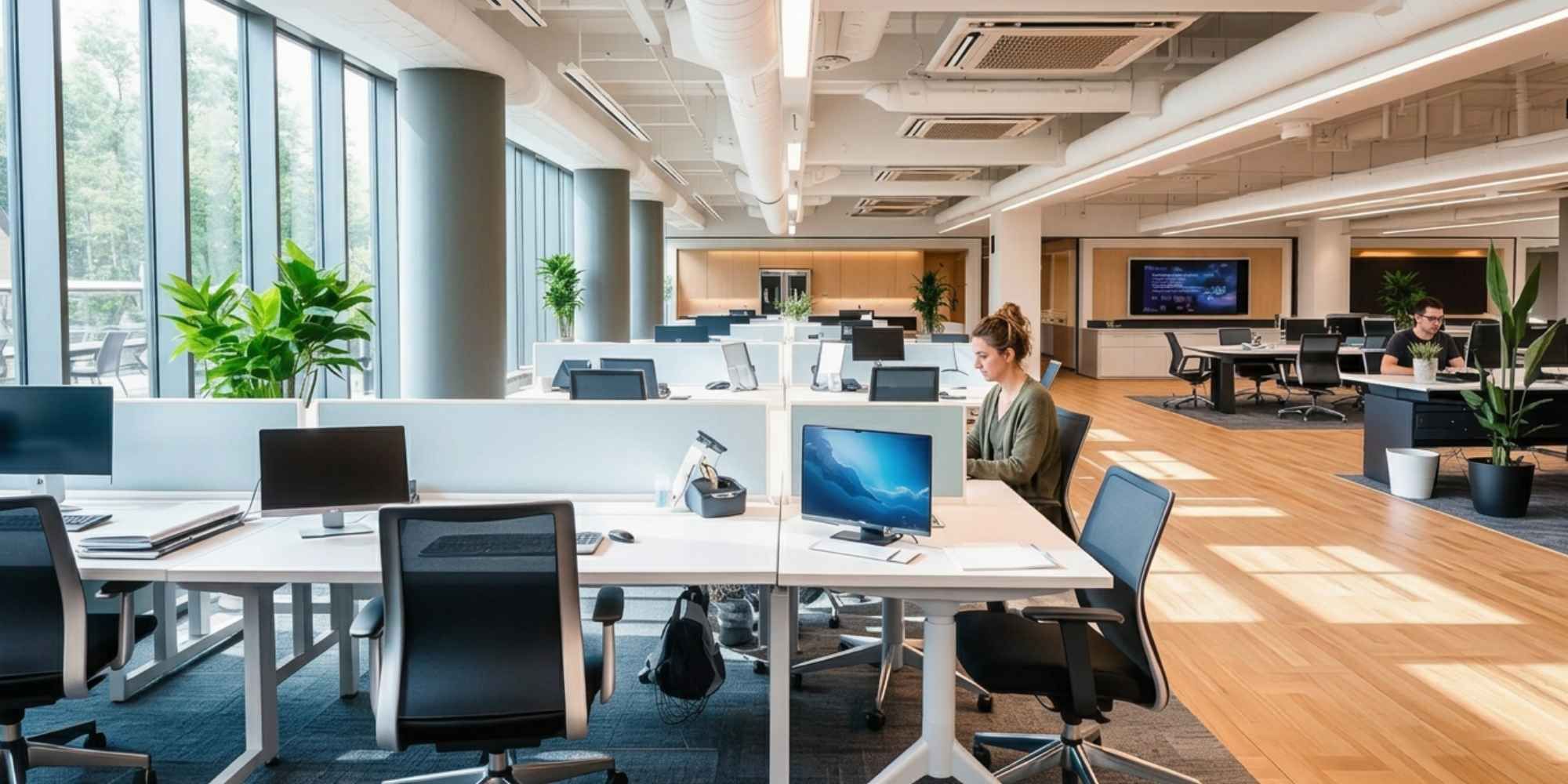
Then hybrid work arrived, and something strange happened. Offices emptied out by half on a typical day, and the noise complaints didn't go away. If anything, they got sharper.
Welcome to the quiet office paradox.
In Short
- Noise has long been one of the most common complaints facility managers handle, and hybrid work has made it more frequent, not less.
- Fewer people means less background sound, so every conversation becomes easier to hear and harder to ignore.
- Desk-based video calls add a steady stream of one-sided conversations to the open floor.
- The fix isn't more walls or more headphones. It's managing background sound like any other building system.
Fewer People, More Distraction
Think about the last time you tried to have a private conversation in a library. Every whisper feels like a broadcast. Now think about a busy café, where you can talk about almost anything and nobody at the next table catches a word. The café is louder, yet it offers more privacy.
That's exactly what happened to the hybrid office. On a full day, dozens of voices, footsteps, keyboards and the hum of ventilation blend into a steady background. Individual conversations dissolve into it. On a half-empty day, that background disappears, and the colleague on the phone three desks away suddenly sounds like they're narrating a podcast just for you.
The issue isn't how loud the office is. It's how understandable speech has become. The U.S. General Services Administration explains it with a simple rule of thumb: once you can make out more than about 20 words out of 100, you can't help being pulled into the conversation. In a quiet room, you'll catch far more than 20. Your brain does the rest, whether you want it to or not.
So the half-empty floor isn't a calmer floor. It's a library with an open-plan layout, and everyone is the person whispering.
Hybrid Added a New Soundtrack: The Desk Video Call
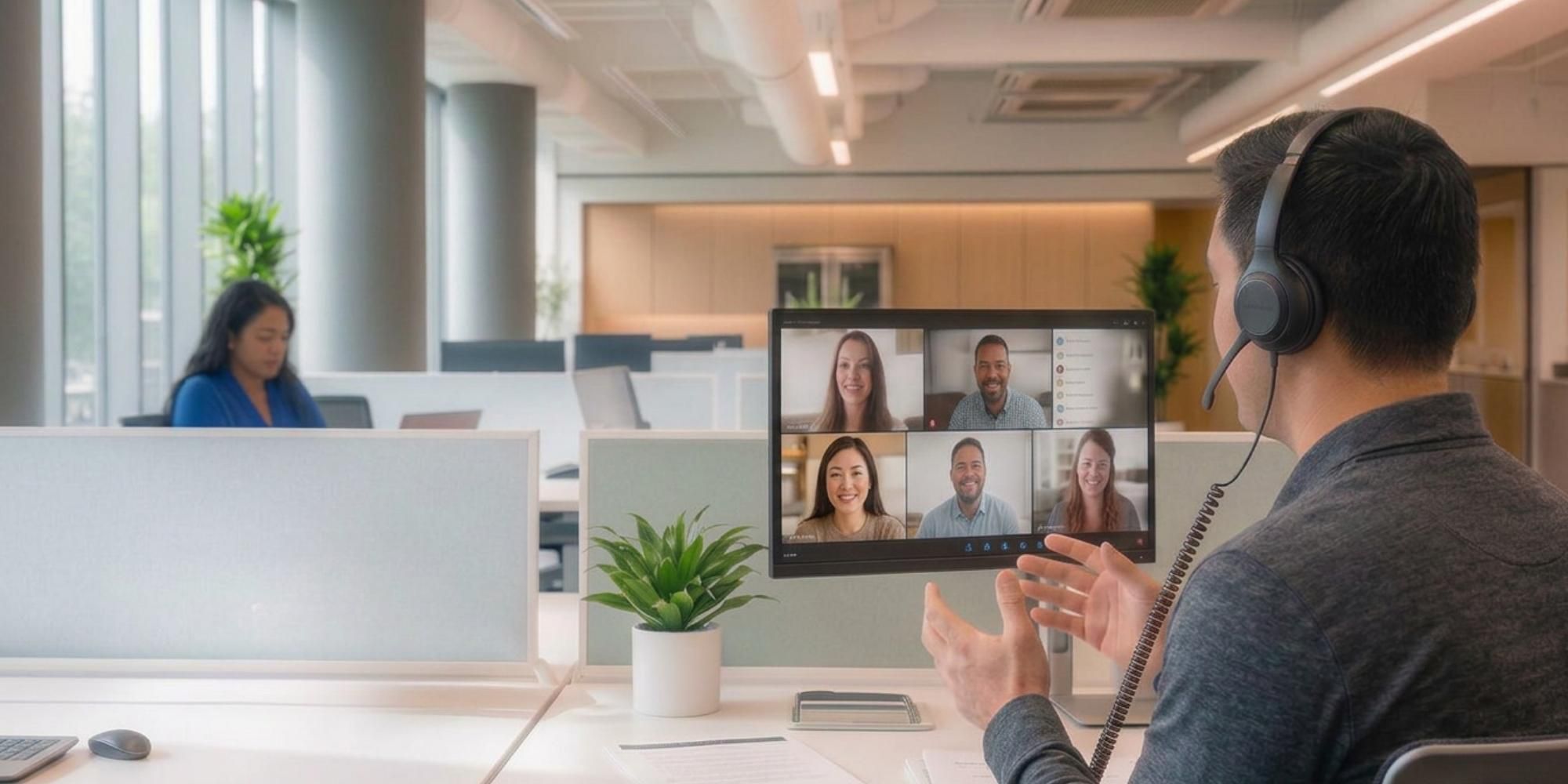
Hybrid work didn't just change who's in the office. It changed what people do once they get there. Many of the meetings that used to happen behind a conference room door now happen at someone's desk, on a laptop, at full voice.
And a video call is the most distracting kind of conversation there is. You hear one side of it, so your brain keeps trying to fill in the other. It's the open-office version of overhearing someone's phone call on the bus, except it lasts 45 minutes and happens every day.
It also creates a privacy problem in the other direction. The person on the call may be discussing a client contract, a patient file or a personnel issue, with no idea that half the floor can follow along.
Why Headphones Aren't a Facilities Strategy
When noise complaints pile up, the usual responses kick in. Each one helps a little. None of them solves the problem on its own.
- Headphones turn a building problem into an employee problem. They protect the listener, not the speaker's privacy, and they make the office feel like a library where nobody talks to each other.
- Phone booths and pods are great, until there are six people waiting for two of them at 10 a.m.
- New walls cost money, take time, disrupt everyone during construction, and lock in a floor plan just when hybrid work demands flexibility.
- Acoustic panels and ceiling tiles absorb echo and make a room feel calmer. They matter, but they can't make nearby speech unintelligible on their own.
Acoustic guidance, including ASTM's guide to open office acoustics and the GSA's Sound Matters, treats good acoustics as a combination of layers: absorbing sound, blocking it, and covering it with a comfortable background. In a hybrid office, the layer that went missing is the background. So the smartest move is to put it back.
Bring Back the Hum, on Purpose
You already manage temperature with HVAC and light with lighting controls. Background sound deserves the same treatment. That's what a sound masking system does: small speakers, usually hidden above the ceiling, add a soft, engineered sound that fills the gap the missing crowd left behind. Conversations nearby turn into a pleasant, unintelligible murmur. The café effect, without the espresso machine.
And no, it isn't white noise. A well-tuned system sounds more like gentle airflow, and it's designed to fade into the background. For reference, the GSA's Sound Matters guide recommends masking at 45 to 48 dBA in open plan spaces.
The Catch: A Hybrid Office Changes Every Day
A busy Tuesday and a nearly empty Friday are two completely different acoustic environments. A system tuned once at installation, or running on a fixed timer, treats them as the same day. That's where a smarter approach makes the difference.
Adaptive control that listens to the room. Soft dB's patented adaptive volume control uses optional ceiling sensors to read the ambient noise in each zone and adjusts the masking sound in real time. The changes are gradual, so occupants don't notice them. They just notice that they can concentrate. In a typical setup from Soft dB's architectural specifications, masking centers around 45 dBA, eases down to about 43 dBA when the space is calm, and rises to about 47 dBA when activity picks up, with every limit programmable. The approach is backed by research Soft dB engineers have presented to the acoustics community, including at NOISE-CON 2017.
SMS-LINK, so the FM team stays in control. SMS-LINK is the central control point for the whole system: a 7-inch touchscreen on site plus a browser-based interface you can use from a laptop, tablet or phone, with nothing to install. Check a zone, adjust a level or set a schedule without waiting for a service call. It connects over Ethernet or WiFi, and Soft dB systems can also communicate with Crestron building management systems.
The result: sound masking stops being a set-and-forget installation and becomes one more building system you can see, tune and trust.
Quick Self-Check: Is Your Office in the Quiet Zone?
You may be dealing with the quiet office paradox if:
- Noise complaints spike on your least busy days.
- People book an eight-person meeting room to take a one-person call.
- Headphones have quietly become part of the dress code.
- Someone can recite their neighbor's weekend plans without ever being invited to hear them.
- "I'm working from home tomorrow, I need to focus" sounds familiar.
A simple first step: compare your noise complaints with your badge or desk-booking data. If the complaints rise as attendance drops, the background sound is the missing piece. For an objective baseline, an acoustic consultant can measure speech privacy using ASTM E1130, the standard test method for open offices.
Come Hear the Difference at IFMA World Workplace 2026
Soft dB is exhibiting at IFMA's World Workplace 2026, November 18 to 20 at the Anaheim Convention Center. Stop by booth 826 to:
- See SMS-LINK and adaptive control in action.
- Talk through your own noise and privacy challenges with our acoustics team.
- Tell us your number one occupant complaint. We're polling facility managers at the show and will share what we learn after World Workplace.
Frequently Asked Questions
Why Does My Office Feel Louder With Fewer People in It?

Fewer people means less background sound. Individual conversations stand out more clearly and can be understood from farther away, so occupants feel more distracted even if the overall noise level is lower.
Are Noise Complaints Still Common for Facility Managers?
Yes. Noise has appeared among the most common office complaints for more than two decades, alongside temperature and cleaning, and hybrid work has made it more noticeable.
Is Sound Masking the Same as White Noise?
No. White noise tends to sound harsh and hissy. Sound masking uses a softer sound spectrum calibrated to each space, so it covers speech while staying comfortable.
Can Sound Masking Adjust as Occupancy Changes?
Yes. Many systems can follow a schedule. Systems with adaptive control, such as Soft dB's, go further by using ceiling sensors to adjust the masking level in real time based on measured ambient noise.
Sources
Primary sources, checked November 2026.
- International Facility Management Association, via FMLink, IFMA Survey Ranks Top Ten Office Complaints (May 21, 2003)
- U.S. General Services Administration, Workplace Solutions, Acoustic Design, and their Impact (presentation, March 2013)
- U.S. General Services Administration, Sound Matters: How to Achieve Acoustic Comfort in the Contemporary Office (December 2011)
- International WELL Building Institute, WELL Building Standard, Feature 79: Sound Masking (legacy version)
- ASTM International, ASTM E1374-06, Standard Guide for Open Office Acoustics and Applicable ASTM Standards
- Soft dB, Adaptive Volume Control for Sound Masking, NOISE-CON 2017, Grand Rapids, MI (June 12 to 14, 2017)
- Soft dB, US Patent 8,116,461 B2: Sound Volume Automatic Adjustment Method and System
- International Facility Management Association, World Workplace 2026: Frequently Asked Questions