What Every Organization Handling Personal Information Needs to Know
We live in an era of unprecedented privacy awareness. Firewalls, encryption, multi-factor authentication, VPNs, and data governance frameworks have become standard practice in virtually every professional sector. Organizations spend enormous resources protecting information as it travels through networks, servers, and devices.
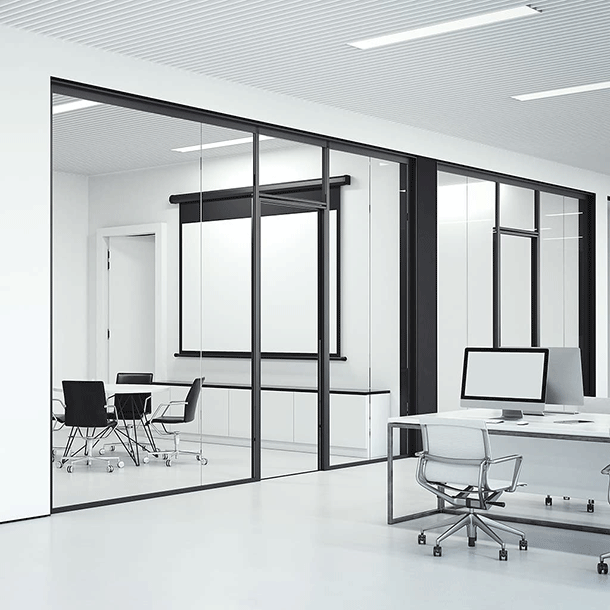
And yet, every day, sensitive conversations travel freely through office spaces, past glass partitions, across open floor plans, through shared ceilings and undercut doors, completely unprotected. The oldest and most basic form of data leakage, one person hearing something they were never meant to hear, remains largely unaddressed. Intentional eavesdropping happens more often than we think. Accidental listening occurs all the time.
The gap is striking. While 96% of executives acknowledge employee productivity as critical to their financial performance, only 6% say they have equipped their offices with noise-mitigating features. Privacy, it turns out, has a physical dimension that most organizations have simply not confronted.
The Privacy Imperative Has Never Been Greater
The global regulatory environment has made privacy a board-level issue.
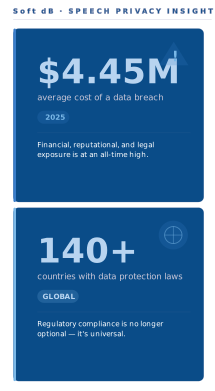
Data breaches cost businesses an average of $4.45 million in 2025.
GDPR fines alone have exceeded EUR 4 billion since the regulation came into force. Usercentrics
Consumer expectations have shifted just as dramatically.
Research shows that 94% of organizations agree that customers won't buy from them if they don't believe their personal data is properly secured.
Trust is no longer assumed. Over 140 countries now have data protection laws in place.
It must be demonstrated, and increasingly, it must be earned in every dimension of the client relationship, including the physical environment in which professional services are delivered.
- This is where most organizations stop short.
- They protect data at rest and in transit.
- They rarely protect data in speech.
What Is Speech Privacy, and Why Does It Matter?
Speech privacy is the condition in which spoken conversations cannot be understood by unintended listeners. It is distinct from simply reducing noise. A space can be quiet and still acoustically exposed, meaning that conversations in adjacent rooms, around corners, or across open workstations remain fully intelligible to anyone nearby.
The research on the workplace consequences of poor speech privacy is unambiguous. A study of 50,000 workers in 351 buildings found that lack of speech privacy was the single greatest source of dissatisfaction, and almost 30% of those in private offices identified poor acoustics as something that interfered with their ability to perform at their best.
Around 69% of employees report dissatisfaction with noise at their primary workspace, and 77% express a preference for calm, quiet, and private when they need to focus. These are not minor inconveniences. They represent a systemic failure of the physical environment to support the work being done inside it.
But for certain industries, the stakes go beyond productivity. They reach into professional ethics, regulatory compliance, legal liability, and client trust.




The Industries That Cannot Afford to Overlook Acoustic Privacy
Not all workplaces carry the same consequences for acoustic failure. Several sectors face specific regulatory, legal, or professional obligations that make speech privacy a compliance issue, not merely a comfort issue.
- Healthcare. Under the HIPAA Privacy Rule, covered entities must implement safeguards to protect against the unauthorized use or disclosure of protected health information, and these safeguards explicitly include physical measures to protect conversations. Patient discussions, diagnosis consultations, and care coordination conversations all qualify as protected health information the moment they are spoken aloud. Waiting rooms adjacent to reception desks, shared nursing stations, and open-plan administrative areas are common HIPAA acoustic vulnerabilities.
- Legal services. And then there is the legal profession, where the confidentiality of spoken words is not just a best practice. It is a foundational ethical and legal obligation.
- Tech offices. The technology office is no longer an office. It is part laboratory, part production floor, part demonstration centre. The separation between functions, the argument goes, is exactly what slows innovation and efficiency down.
- Government and defense. Classified and controlled unclassified information environments operate under the most stringent acoustic requirements of any sector, with standards defined and enforced at the federal level. The physical separation of speech is not optional. It is mandated.
- Financial services. Banks, wealth management firms, insurance companies, and investment advisors handle information that is simultaneously personally sensitive, commercially valuable, and subject to regulatory protection under frameworks including GLBA, SEC rules, and FINRA guidance. A client conversation overheard by another client in a branch office or advisory suite is not a theoretical risk. It is a routine one.
- Human resources and corporate management. Compensation discussions, performance reviews, termination decisions, workplace investigations, and merger negotiations all occur in offices that were rarely designed with the acoustic rigor those conversations require. In many organizations, these conversations happen in glass-front offices or thin-walled conference rooms where intelligibility extends far beyond the intended audience.
The Law Firm Problem: When the Office Itself Becomes a Liability
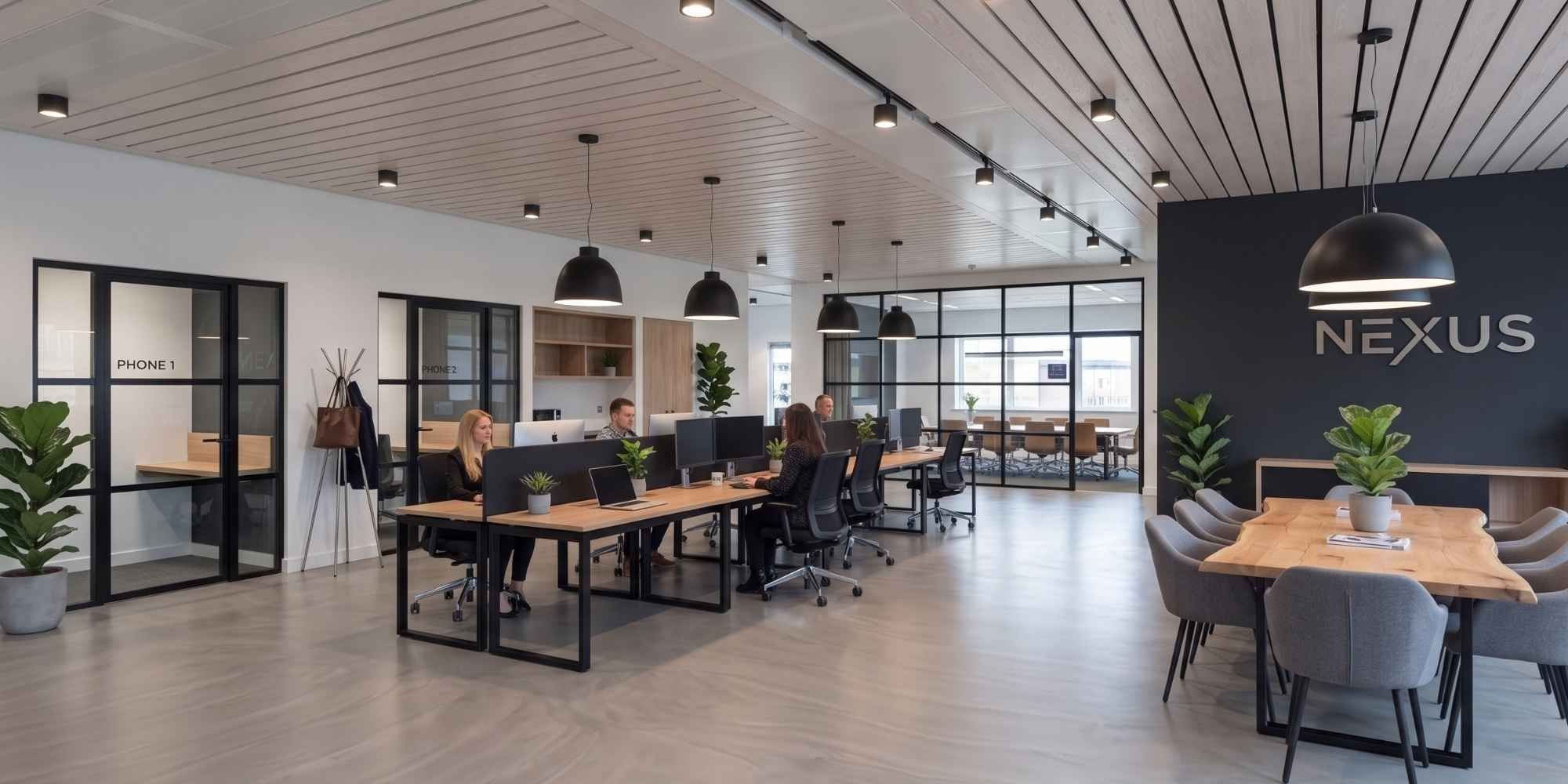
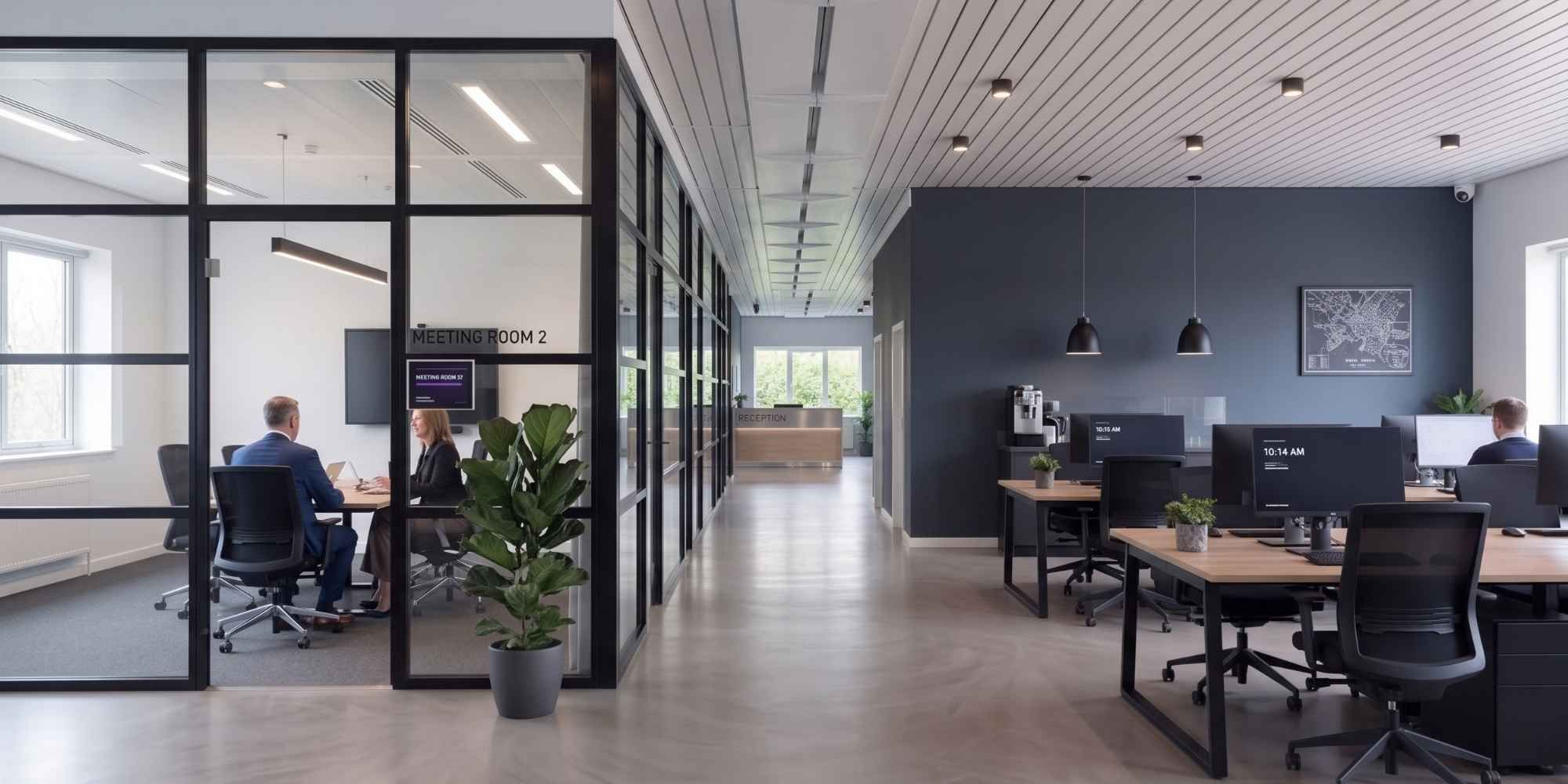
The modern law office has undergone a significant transformation. Driven by cost pressures, talent expectations, and evolving workplace design philosophy, many firms have embraced open floor plans, glass-front offices, collaborative lounges, and flexible workstations. These spaces look contemporary and project an image of transparency and accessibility. They also present a serious confidentiality challenge.
ABA Model Rule 1.6(c) requires that a lawyer make reasonable efforts to prevent the inadvertent or unauthorized disclosure of, or unauthorized access to, information relating to the representation of a client. That obligation does not apply only to email encryption or document management systems. It extends to the physical environment in which legal work is performed and in which client conversations take place.
Consider the range of conversations that occur in a typical law office on any given day: litigation strategy sessions, M&A deal discussions involving nonpublic information, employment dispute negotiations, estate planning disclosures, intellectual property filings, criminal defense consultations, and financial restructuring deliberations. Every one of these conversations carries confidentiality obligations. Every one of them is at risk in a poorly designed acoustic environment.
The confidentiality rule applies not only to matters communicated in confidence by the client, but to all information relating to the representation, whatever its source. A lawyer may not disclose such information except as authorized or required by the Rules of Professional Conduct or other law.
The physical design of a law office is not exempt from this obligation. When a client's voice carries through a glass wall to the reception area, when a partner's phone call is audible in the hallway, when a paralegal overhears a strategy conversation not intended for them, the firm's acoustic environment has become a professional conduct issue.
Where Law Firms Are Most Exposed
Understanding the specific acoustic failure points in a legal workplace is the first step toward addressing them.
- Glass-front offices. Visually appealing and symbolically transparent, glass-front offices are acoustically difficult. Glass transmits sound with far greater efficiency than most people assume. Conversations that feel private to the occupant are often intelligible to anyone passing in the corridor.
- Conference rooms. Meeting rooms are frequently the most acoustically vulnerable spaces in a law firm. Sound leaks through shared walls, ceiling plenums, HVAC ducts, and gap tolerances around doors. A conference room that looks and feels private may not be. Conversations about litigation strategy, settlement negotiations, or deal terms may be audible in the adjacent space.
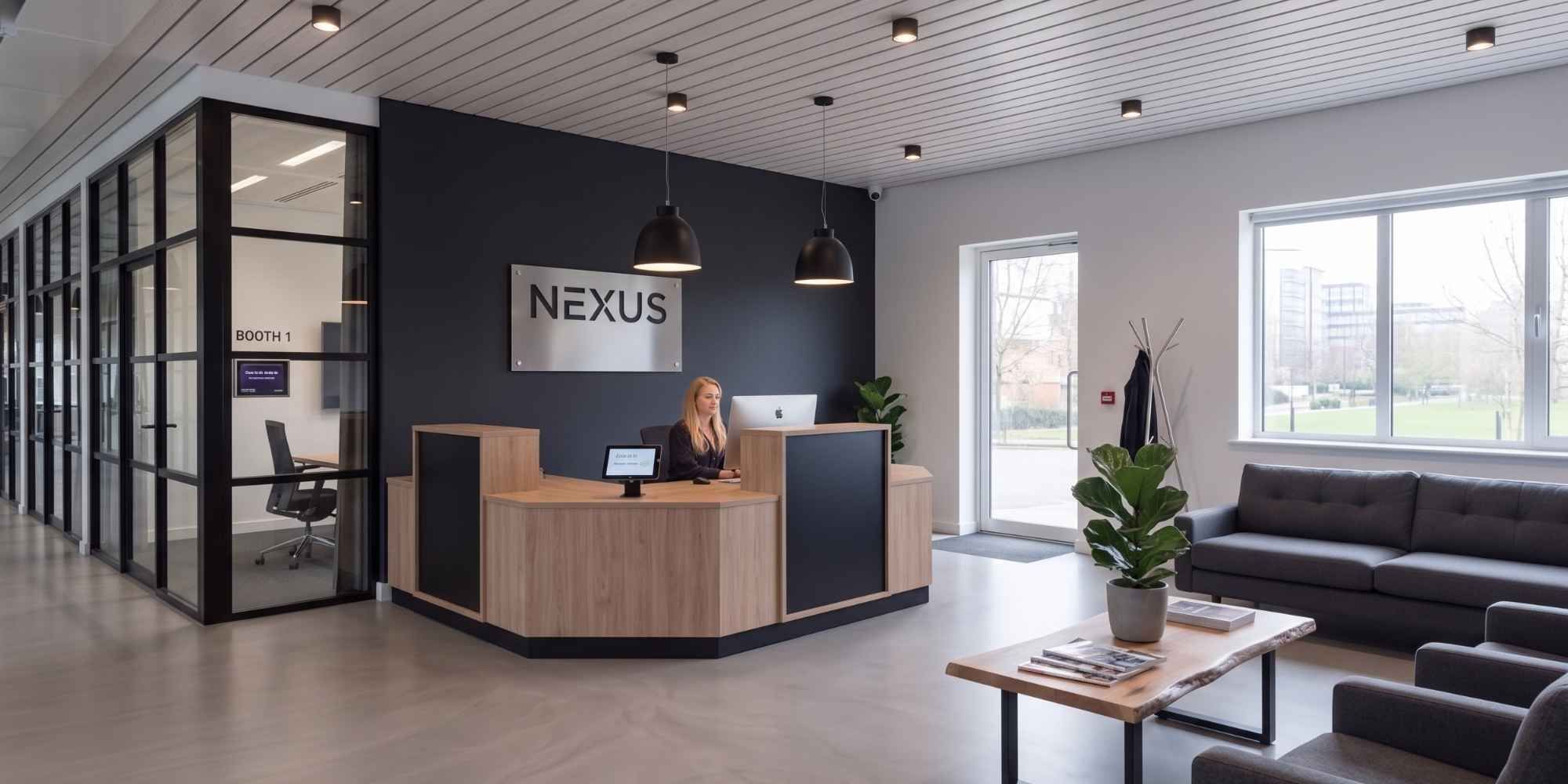
- Reception and waiting areas. Clients waiting for appointments may inadvertently hear conversations, phone calls, or exchanges between staff that were never intended for outside ears. The reception desk, typically positioned near the firm's entrance for logistical reasons, is often one of the most acoustically exposed points in the office.
- Open workstations and collaborative areas. Associates, paralegals, and administrative staff working in open environments may overhear attorney conversations, and those same staff members have their own conversations within earshot of others. In legal environments, the chain of confidentiality extends throughout the team.
- Virtual meeting spillover. As hybrid work has become standard, video calls and conference calls have introduced a new acoustic vulnerability. Speakerphone conversations and laptop audio in partially open or semi-private spaces can broadcast client information well beyond the intended meeting participants.
How Law Firms Should Approach Speech Privacy: A Layered Framework
Protecting speech privacy in a legal workplace is not a single-intervention problem. It requires a layered approach that addresses the physical, operational, and technical dimensions of acoustic performance.
- Acoustic Design and Wall Construction: The foundation of any speech privacy strategy is the physical envelope of the space. Walls between attorney offices, conference rooms, and adjacent spaces should meet appropriate Sound Transmission Class (STC) ratings. For confidential environments, STC ratings of 45 or higher are generally recommended.
- Acoustic Ceiling Systems: In open-plan areas, sound generated at one workstation or in one enclosed office can travel through the plenum and emerge in an entirely different part of the floor. Acoustic ceiling tiles with appropriate Noise Reduction Coefficient (NRC) and Ceiling Attenuation Class (CAC) ratings help address both airborne noise absorption and sound flanking through the plenum.
- Acoustic Panels and Surface Treatments: Hard, reflective surfaces, glass, polished concrete, and open ceilings create environments where sound bounces and travels further than it would in more absorbent spaces. Acoustic wall panels, carpet, and other absorptive finishes reduce the reverberation time of a space, making it less conducive.
- Private Office and Conference Room Design: Beyond wall construction, door seals matter considerably. Acoustic door seals and automatic door bottoms can significantly reduce sound leakage at one of the most common failure points in enclosed offices. Conference rooms used for particularly sensitive conversations should be evaluated for flanking paths and ceiling plenum continuity.
- Sound Masking: Sound masking is frequently the most misunderstood tool in the acoustic privacy toolkit and also one of the most effective. It is not white noise, and it is not a noise cancellation technology. Sound masking works by introducing an engineered, frequency-shaped signal into a space, calibrated to match the acoustic characteristics of human speech. The result is a gentle, ambient background sound, often described as resembling softly moving air, that reduces the intelligibility of nearby conversations without creating a harsh or distracting listening environment.
The key principle is speech intelligibility, not volume. A conversation does not need to be completely inaudible to be private. It needs to be unintelligible, meaning that even if sound reaches an unintended listener, the words cannot be reliably understood. Sound masking achieves this by narrowing the radius within which speech remains intelligible.
Physical soundproofing through acoustic panels and absorptive materials typically costs between $10 and $30 per square foot, while wall construction and high partitions run $15 to $50 per square foot. Sound masking systems, by contrast, cost approximately $4 per square foot while delivering a higher privacy index. Sound Masking ROI calculator.
For firms evaluating a new build-out or renovation, sound masking also generates direct construction savings. When integrated at the planning stage, sound masking technology enables lower partition heights, less insulation in interior walls, and lower-spec acoustic ceiling tiles. When installed after construction is complete, which is entirely feasible given that most modern sound masking systems are designed for retrofit deployment, it remains one of the most cost-effective improvements a firm can make to its acoustic environment.
Modern adaptive sound masking systems take this further. Rather than emitting a static signal, they continuously monitor ambient sound conditions and adjust output levels in real time, responding to changes in occupancy, activity, and background noise throughout the day. This means the system is always calibrated to actual conditions, not to a fixed assumption of what the space sounds like during installation.
A Strategic Reframe: Speech Privacy as Professional Risk Management
Law firms invest heavily in cybersecurity, data governance, and document management to protect client information. The conversation about physical speech privacy belongs in the same risk management framework.
As more firms move toward open floor plans for space and cost reasons, the ethical obligation under ABA Model Rule 1.6(c) to make reasonable efforts to prevent inadvertent disclosure does not diminish. It intensifies. The physical environment must evolve alongside design trends, not remain static while the design around it changes.
The practical steps are available, well-researched, and increasingly cost-effective. Acoustic design, thoughtful space planning, surface treatments, sealed conference rooms, and sound masking represent a mature, evidence-based toolkit. None of these interventions requires the firm to sacrifice the modern aesthetic it may have invested in. All of them make the firm's commitment to client confidentiality visible, demonstrable, and defensible.
Client trust is built in many places. One of them is the room where the conversation happens, and whether the firm was thoughtful enough to make sure no one else could hear it.
Sources
American Bar Association. Model Rules of Professional Conduct, Rule 1.6: Confidentiality of Information. americanbar.org
Association of Corporate Counsel. Managing Attorney-Client Privilege and Confidentiality in Open Office Environments. acc.com
Compliancy Group. HIPAA Soundproofing Requirements. compliancy-group.com
Gensler Research Institute. Global Workplace Survey 2026. gensler.com
Haworth. Decrease Office Noise to Increase Productivity. haworth.com
IBM. Cost of a Data Breach Report 2024/2025. ibm.com/security
Soft dB. How Much Does Sound Masking Cost? ROI Calculator. softdb.com
Speakwise Blog. Workplace Noise Statistics 2026. speakwiseapp.com
U.S. Department of Health and Human Services. Summary of the HIPAA Privacy Rule. hhs.gov