Guide, Limits & Equipment
Construction Vibration Monitoring
Construction vibration monitoring measures ground and structural vibration generated by construction activities to help protect nearby buildings, infrastructure and vibration-sensitive equipment. This guide was created to help project teams understand how construction vibration monitoring works, how vibration is measured, which limits and standards may apply, where sensors should be installed, and what to look for in a monitoring system.
Get a system quote Explore monitoring equipmentConstruction Vibration Basics
What construction vibration monitoring is, why it matters and which activities generate vibration.
Measurements, Limits & Standards
Understand PPV, PVS, dominant frequency, vibration criteria and applicable guidelines.
Planning & Sensor Placement
Learn how to plan monitoring, select locations and install vibration sensors correctly.
Monitoring Equipment & System Requirements
Choose the right monitoring system and manage real-time alerts, data and reporting.

Construction Vibration Basics
What Is Construction Vibration Monitoring?
Construction vibration monitoring is the measurement and analysis of vibration generated by construction activities.
Depending on the monitoring objective, vibration can be measured in the ground, at a building foundation or directly on a structure. The goal is not simply to determine whether vibration is being generated — it is to understand how much vibration is occurring, when it occurs, and whether it poses a risk to structural integrity, sensitive equipment, or human comfort.
For long-term or higher-risk work, continuous monitoring provides a time-stamped record that can be reviewed throughout construction rather than relying only on occasional measurements, thus preventing the risk of exceeding applicable limits without knowing it, which can lead to costly repairs.
Ground, Building and Structural Vibration Monitoring
Construction activities generate ground-borne vibration that propagates through soil and rock before reaching nearby buildings, infrastructure or vibration-sensitive equipment.
Ground vibration monitoring measures this vibration in the ground, while building or structural vibration monitoring measures the response at or directly on the structure being evaluated.
How much vibration reaches a receptor depends on factors such as the vibration source, distance, soil and rock conditions, foundation coupling and the characteristics of the receiving structure.
Why and When Is Construction Vibration Monitoring Needed?
Know What Is Happening Before Vibration Becomes a Problem.
Construction vibration monitoring is particularly important when vibration-generating work takes place near buildings, utilities, infrastructure or vibration-sensitive equipment.
Monitoring can help project teams:
Verify project limits
Verify that vibration remains within project limits.
Protect buildings and infrastructure
Protect nearby buildings and infrastructure.
Protect sensitive operations
Protect vibration-sensitive equipment and operations.
Identify significant events
Identify significant vibration events as they happen.
Investigate complaints
Investigate complaints or potential damage claims.
Document site conditions
Document site conditions before and throughout construction.
Adjust construction methods
Adjust construction methods when vibration levels change or increase.
Existing cracks or structural conditions can complicate damage investigations. For projects where that risk is significant, baseline measurements and pre-construction condition surveys can complement monitoring by documenting conditions before vibration-intensive work begins.
Sensitive facilities may require even more stringent criteria. Laboratories, hospitals, museums, data centers and facilities containing precision equipment generally have limits driven by the equipment or process itself rather than conventional building-damage criteria.
Which Construction Activities Generate Vibration?
Not all construction activities produce the same type or level of vibration. Equipment size, operating method, ground conditions, distance and nearby structures all influence the vibration ultimately measured.
Construction activities can generate ground-borne vibration through impact, rotating equipment, repeated loading or other forces transmitted into the ground.
| Construction Activity | Typical Vibration Characteristic |
|---|---|
| Impact pile driving | High-energy transient vibration |
| Vibratory pile driving | Repetitive or continuous vibration |
| Demolition / hydraulic breaking | Impact vibration |
| Vibratory compaction | Repeated ground vibration |
| Excavation | Site- and equipment-dependent |
| Drilling / caisson drilling | Site-dependent vibration |
| Heavy tracked equipment | Repeated low-to-moderate vibration |
| Blasting | High-energy transient vibration |
For this reason, monitoring requirements should be adjusted based on the actual construction activity and the receptors that need to be protected — not on a single generic vibration limit.

Measurements, Limits & Standards
How Is Construction Vibration Measured?
Construction vibration is commonly evaluated using vibration velocity, frequency and waveform data.
For many construction projects, the most important information includes:
- Peak Particle Velocity (PPV), measured on 3 axes
- Peak Vector Sum (PVS)
- Frequency
- Waveform or time-history data
- Event time and duration
- Root Mean Square Velocity (RMS), for sensitive structures and human perception
This allows a project team to move beyond a single number and understand the vibration event in context.
For vibration-sensitive equipment, vibration levels are assessed using one-third-octave-band RMS velocity over a 1-second interval, rather than peak particle velocity (PPV).
A Triaxial Vibration Measurement
PPV Explained
What Is Peak Particle Velocity (PPV)?
Peak Particle Velocity, or PPV, is the maximum instantaneous vibration velocity measured during a vibration event. PPV is measured in one axis. The sum of the peak particle velocity in the 3 axis is called Peak Vector Sum and considers the peak velocity of each axis at a given time.
PPV is one of the most widely used parameters for evaluating construction-induced vibration and potential building or structural damage.
In the United States, PPV is commonly expressed in inches per second (in/s), with millimeters per second (mm/s) often provided as the metric equivalent.
PPV is an important measurement, but it should not always be interpreted in isolation. Frequency, measurement location, number of occurrences, vibration source, structural condition and the applicable project criteria can all affect how a vibration event is evaluated and its impact near a construction site.
Frequency, Waveforms and Three-Axis Measurements
A vibration waveform shows how vibration changes over time.
It provides context that a single maximum value cannot, including when the event occurred, how long it lasted and how vibration developed throughout the event.
Triaxial sensors measure vibration in three perpendicular directions. Depending on the monitoring system and project requirements, measurements can include PPV, RMS velocity, dominant frequency, frequency spectra, such as 1/3 octave bands, and complete time histories.
Waveform data is particularly useful when investigating a threshold exceedance or determining whether a measured event corresponds to a specific construction activity.
Frequency content can be extracted from an in-depth analysis of the waveforms.
What Are Acceptable Construction Vibration Limits?
There Is No One-Size-Fits-All Limit.
In general, there is no single universally acceptable vibration limit for every construction project. Vibration criteria can depend on:
- Structure type
- Structural condition
- Historic or fragile construction
- Vibration-sensitive equipment
- Vibration source
- Vibration frequency
- Measurement location
- Agency or local requirements
- Project specifications
For that reason, measured vibration should always be compared with the criteria established for the specific project, rather than with a universal “safe” PPV value.
Example U.S. Construction Vibration Criteria
For example, FTA guidance includes PPV criteria commonly referenced when assessing potential building damage:
| Example Building Category | PPV |
|---|---|
| Reinforced-concrete, steel or timber | 0.50 in/s (12.7 mm/s) |
| Engineered concrete and masonry | 0.30 in/s (7.6 mm/s) |
| Non-engineered timber and masonry | 0.20 in/s (5.1 mm/s) |
| Buildings extremely susceptible to vibration damage | 0.12 in/s (3.0 mm/s) |
These values are guideline criteria, not universal construction vibration limits.
Different agencies, jurisdictions and project specifications may establish different criteria, particularly for historic structures, continuous or frequently intermittent vibration, buried infrastructure or vibration-sensitive equipment.
Construction Vibration Standards by Country
United States
Construction Vibration Monitoring Standards and Guidelines in the United States
Construction vibration requirements in the United States can come from several sources. There is no single U.S. standard that governs every construction project. Applicable requirements may instead be established by an agency, project owner, engineer, local jurisdiction, permit or construction specification. Sometimes, even international guidelines are used to establish vibration limits.
FTA
The Federal Transit Administration (FTA) manual provides widely referenced guidance for evaluating construction vibration, including building-damage criteria and vibration-sensitive land uses.
FHWA
Federal Highway Administration (FHWA) guidance covers construction vibration measurement methods, instrumentation, PPV, geophones, accelerometers, sensor mounting and measurement procedures.
Caltrans
Caltrans provides detailed guidance for transportation and construction vibration and distinguishes between transient sources and continuous or frequently intermittent vibration.
Project Specifications and Local Requirements
For many projects, the construction specification is commonly named vibration monitoring plan, and the document that ultimately defines how monitoring must be performed. It may establish:
- Vibration limits
- Measurement parameters such as the frequency range to be measured
- Sensor requirements
- Monitoring locations and location of sensitive receivers
- Warning levels
- Exceedance levels
- Alarm recipients
- Reporting requirements
- Response procedures
That makes the project specification one of the first documents that should be reviewed before selecting or deploying a monitoring system.
Blast-Induced Vibration
Projects involving blasting may also reference criteria such as USBM, OSMRE or ISEE guidance depending on jurisdiction, type of vibrations generated, and project requirements.
International Standards
International projects — and U.S. projects with specific contractual requirements — may reference standards such as:
- DIN 4150-3
- AS2187.2
- BS 7385-2
- ISO 4866
Some of these criteria, such as DIN 4150-3, are frequency-dependent, meaning that vibration limits vary depending on frequencies. The applicable criterion should always be determined based on project requirements rather than selected simply because a standard is commonly used elsewhere.

Planning & Sensor Placement
How Do You Monitor Vibration During Construction?
Identify. Measure. Alert. Respond. Mitigate.
An effective construction vibration monitoring program starts before vibration-intensive work begins and continues through measurement, response and reporting.
1.
Identify vibration sources and sensitive receptors
Determine which activities are likely to generate significant vibration and identify nearby buildings, utilities, structures or sensitive equipment requiring protection.
2.
Establish existing conditions where required
Baseline measurements and pre-construction condition surveys can document existing vibration and physical conditions before construction begins.
3.
Determine the applicable vibration criteria
Review project specifications, agency requirements, local requirements and any criteria established by the engineer or project owner. In some cases, multiple criteria can apply depending on the structure and equipment to protect.
4.
Select the monitoring equipment
Choose sensors and monitoring equipment suited to the expected vibration levels, frequency content and required measurement parameters.
5.
Select monitoring locations
Install sensors where measurements will appropriately represent vibration at the receptor or structure being protected.
6.
Configure warning and exceedance thresholds and alerts
Warning thresholds give teams an opportunity to investigate changing conditions before a project limit is exceeded. Exceedance thresholds identify events requiring immediate review or action.
7.
Monitor and record
Monitoring can be continuous, event-based or limited to specific vibration-generating activities depending on project requirements.
8.
Review events and respond
When limits are approached or exceeded, review the measurements and waveform, identify the probable source and follow the project response procedure. In most cases, implementation of mitigation measures to prevent exceedances is also necessary.
9.
Document and report
Maintain measurements, events, alarms, waveforms and reports to create a clear monitoring record throughout the project.
What Should a Construction Vibration Monitoring Specification Document Include?
A construction vibration monitoring specification document should clearly define the project-specific requirements, what must be measured, where it must be measured and what happens when established criteria are approached or exceeded. In general, those documents are included in the project specification documentation.
Typical requirements can include:
- Vibration measurement parameters
- Instrument and sensor requirements
- Frequency range
- Sensor monitoring locations
- Sensor mounting and coupling requirements
- Warning thresholds
- Exceedance thresholds
- Continuous or event-based recording
- Waveform characteristics (pre-trigger, duration, trigger level, etc.)
- Data storage
- Remote communication capabilities
- Notification recipients
- Calibration or verification requirements
- Reporting frequency
- Exceedance response procedures
A clear specification makes equipment selection, deployment and project response much easier and more straightforward to manage.
Construction Vibration Monitoring Plan
The monitoring plan converts the project requirements into an operational approach.
It typically identifies the vibration sources and sensitive receptors, monitoring locations, applicable criteria, selected instrumentation, available alarm thresholds, responsible personnel, communications, reporting requirements and response actions. For higher-risk projects, the plan may also include baseline vibration measurements, pre-construction condition surveys and mitigation procedures.
Where Should Construction Vibration Monitors Be Installed?
Measure Where the Risk Is.
The best monitoring location is determined by the location of the vibrations source as well as the receptor being protected and the applicable measurement criteria, not simply by placing the sensor as close as possible to the construction activity.
Depending on the project, vibration may be measured:
- Near the source to characterize the vibration generated.
- Along the propagation path to understand how vibration travels through the ground.
- At a building foundation to evaluate vibration reaching the structure.
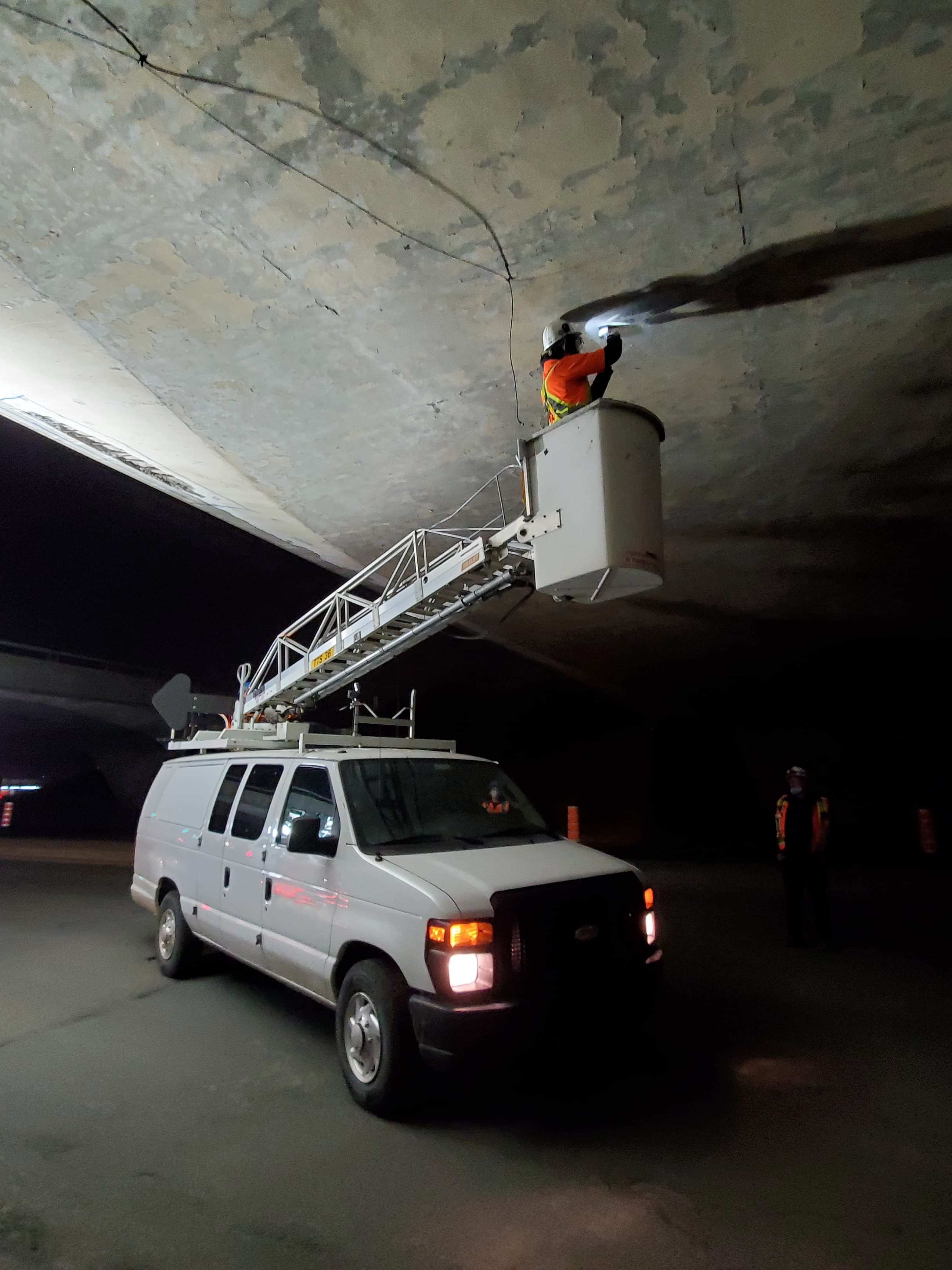
- Directly on a structural element.
- Inside the building, near vibration-sensitive equipment or operations.
Projects with multiple sensitive receptors, large work areas or changing construction activities may require several simultaneous monitoring locations or frequent relocation of vibration sensors.
How Should Vibration Sensors Be Mounted?
Proper sensor mounting is essential for reliable vibration measurements, and the sensor should be installed at the point where the maximum vibration amplitude is expected. A poorly coupled sensor can move independently from the surface being monitored and affect the accuracy of the recorded data and in some cases, underestimate the vibration levels generated.
The mounting method should match the measurement location and project requirements as well as to follow applicable standard recommendations (ISEE, DIN, etc.).
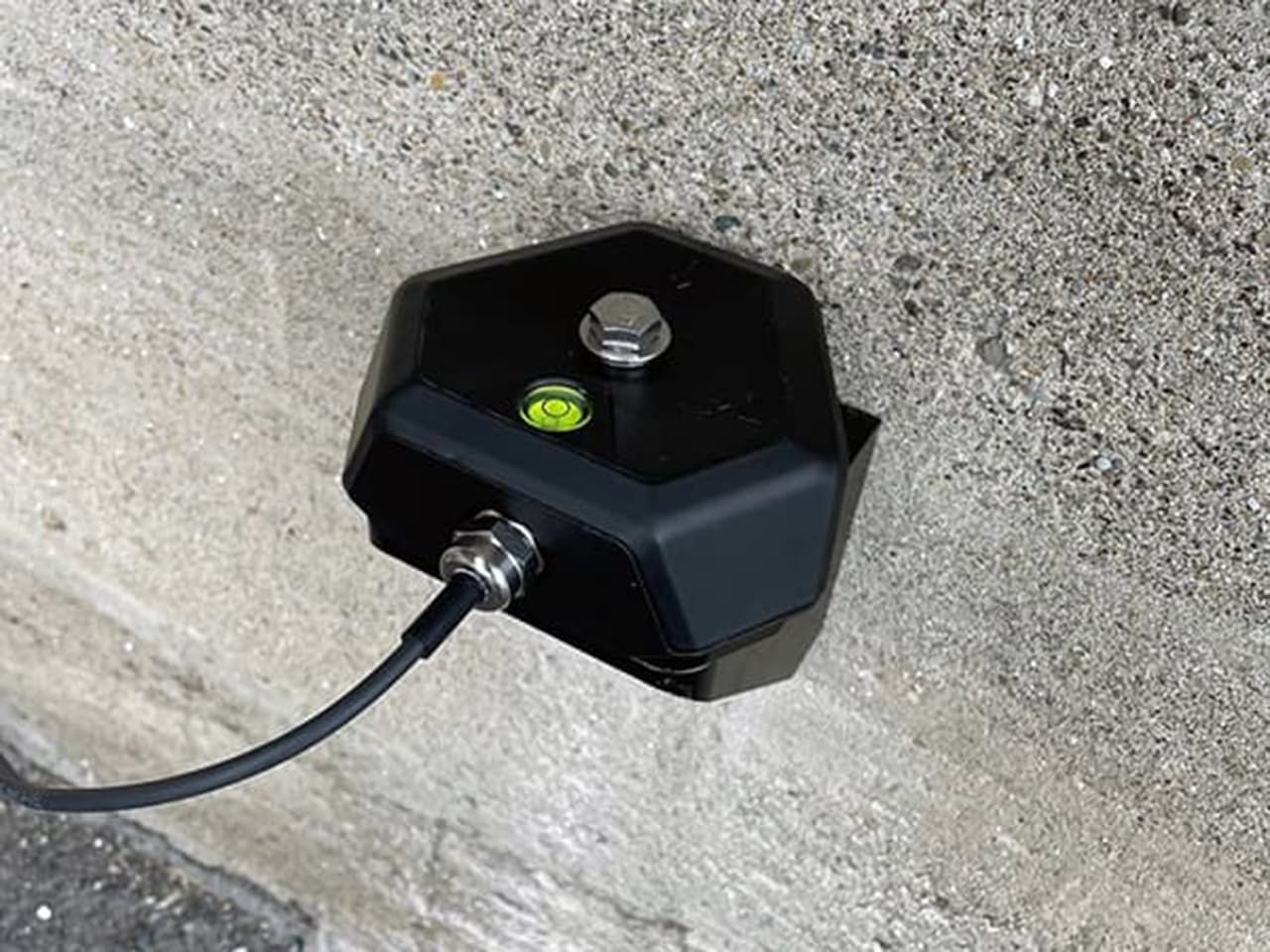
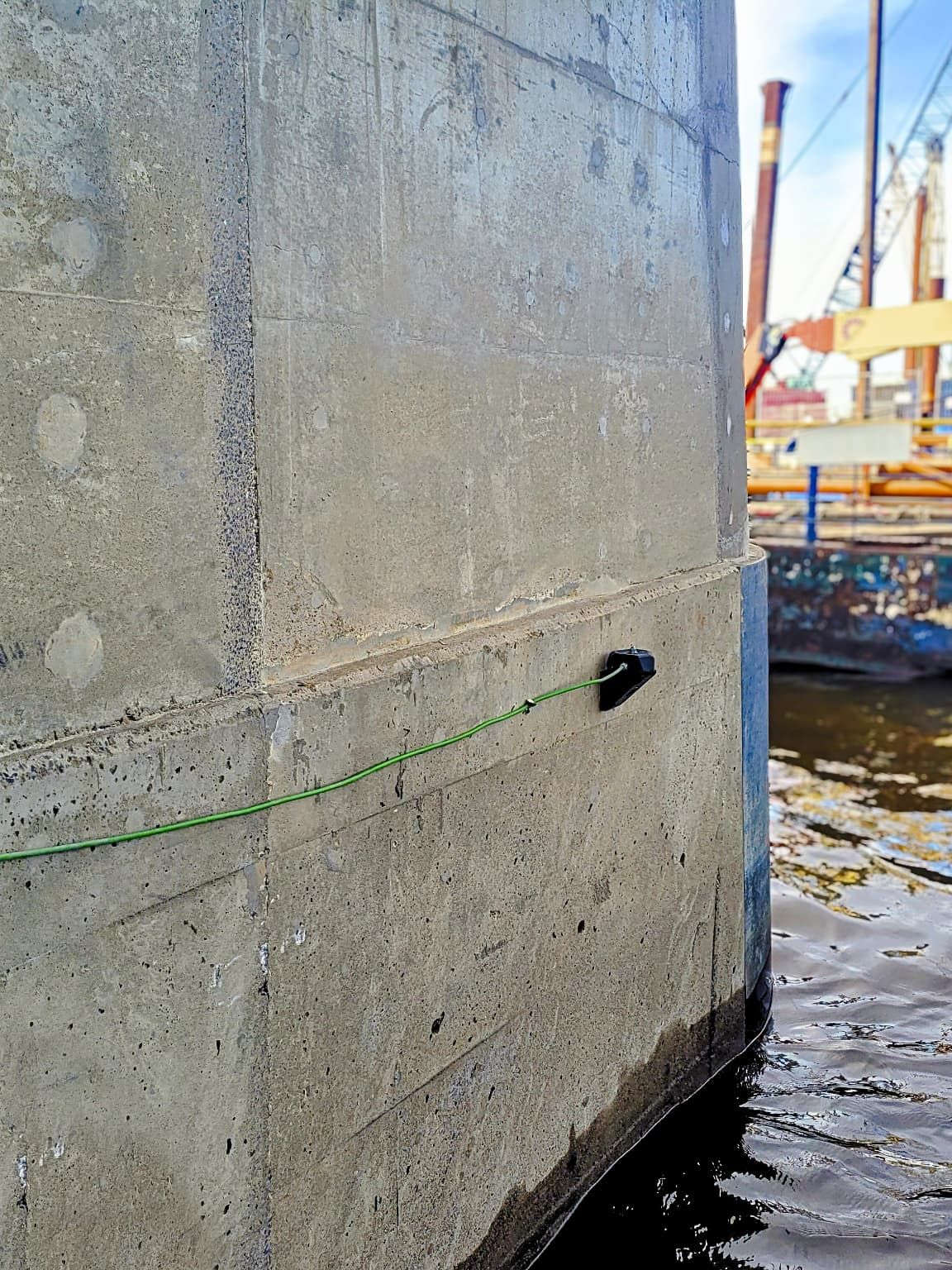
For ground vibration monitoring, sensors may be installed using spikes, by burying the sensor, or by otherwise firmly coupling it to the soil. On concrete slabs, foundations or structural elements, the sensor should be securely anchored so that it follows the motion of the measured surface.
Key Considerations
- Firm coupling: the sensor should move with the ground or structure being monitored.
- Stable installation: avoid loose surfaces or locations where the sensor can be disturbed by workers or equipment, or where coupling could be affected by weather conditions.
- Correct orientation: align the sensor axes according to the project requirements and sensor instructions.
- Leveled installation: verify that the sensor is properly leveled to ensure maximum accuracy.
- Protected location: protect the sensor and cable from construction traffic and accidental impacts.
- Consistent installation: when comparing measurements between locations or over time, use consistent mounting methods whenever possible.
For long-term monitoring, sensor installation should also allow the instrument to remain stable and protected throughout changing site conditions. Also, sensors such as the Smart Triaxial Geophone allow the sensor to be checked remotely as well as its inclination, thus reducing uncertainties in the installation of the sensor. Good data starts with good coupling.

Monitoring Equipment & System Requirements
Construction Vibration Monitoring Equipment
Reliable Measurements Are Only the Beginning.
Accurate measurements start with the right sensor, but reliable long-term monitoring depends on the entire system around it.
When selecting construction vibration monitoring equipment, consider not only measurement range and frequency response, but also sensor installation, data integrity, local storage, communications, remote diagnostics, alerts, power autonomy and reporting.
A system that performs well in the lab must also remain reliable, accessible and practical to operate throughout the project.
What Should You Look for in a Vibration Sensor?
When selecting construction vibration monitoring equipment, make sure the sensor is suited to the expected vibration levels, frequency range and installation conditions of your project.
Also consider how the sensor will be installed, calibrated and serviced, how the signal is transmitted, and whether the measurement location can be selected independently from the monitoring station.
Triaxial Geophones
Geophones measure vibration velocity directly and are widely used for PPV-based construction vibration monitoring.
A triaxial geophone measures vibration velocity in three directions and can also provides RMS velocity measurements, making it particularly well suited to ground vibration from activities such as pile driving, hydraulic breaking, demolition and blasting. Since those sensors natively measure velocity, their background noise levels are generally extremely low, in the micrometer per second range.
Digital Output and Long Cable Runs
For installations requiring longer cable runs, consider how the vibration signal is transmitted between the sensor and monitoring station. The Soft dB Smart Triaxial Geophone is IP68-rated and processes the signal directly within the sensor and transmits measurements digitally, eliminating interference and preserving signal integrity over long distances up to 100 m.
This also allows the sensor to be installed where the vibration needs to be measured, while the monitoring station can be positioned where communications, power and site access are better.
Accelerometers
Accelerometers measure vibration acceleration and can be appropriate when the expected vibration level or frequency range makes an accelerometer better suited to the application. However, most requirements are based on velocity rather than acceleration, which may require embedded processing or post-processing to convert the measurements to velocity.
The choice between a geophone and an accelerometer should therefore be based on:
- Expected vibration levels
- Frequency content
- Measurement objective
- Applicable criteria
Consider the Installation Environment
If the sensor will be permanently installed, buried or exposed to water and harsh site conditions, verify that it is designed for that type of installation. Soft dB’s Smart MEMS Vibration Sensor is IP68-rated and is designed specifically to be buried or securely mounted for long-term monitoring applications.
Its wired digital connection also allows the sensor to remain at the measurement point while the monitoring station is positioned in a more accessible location with better communications.
Borehole Geophones
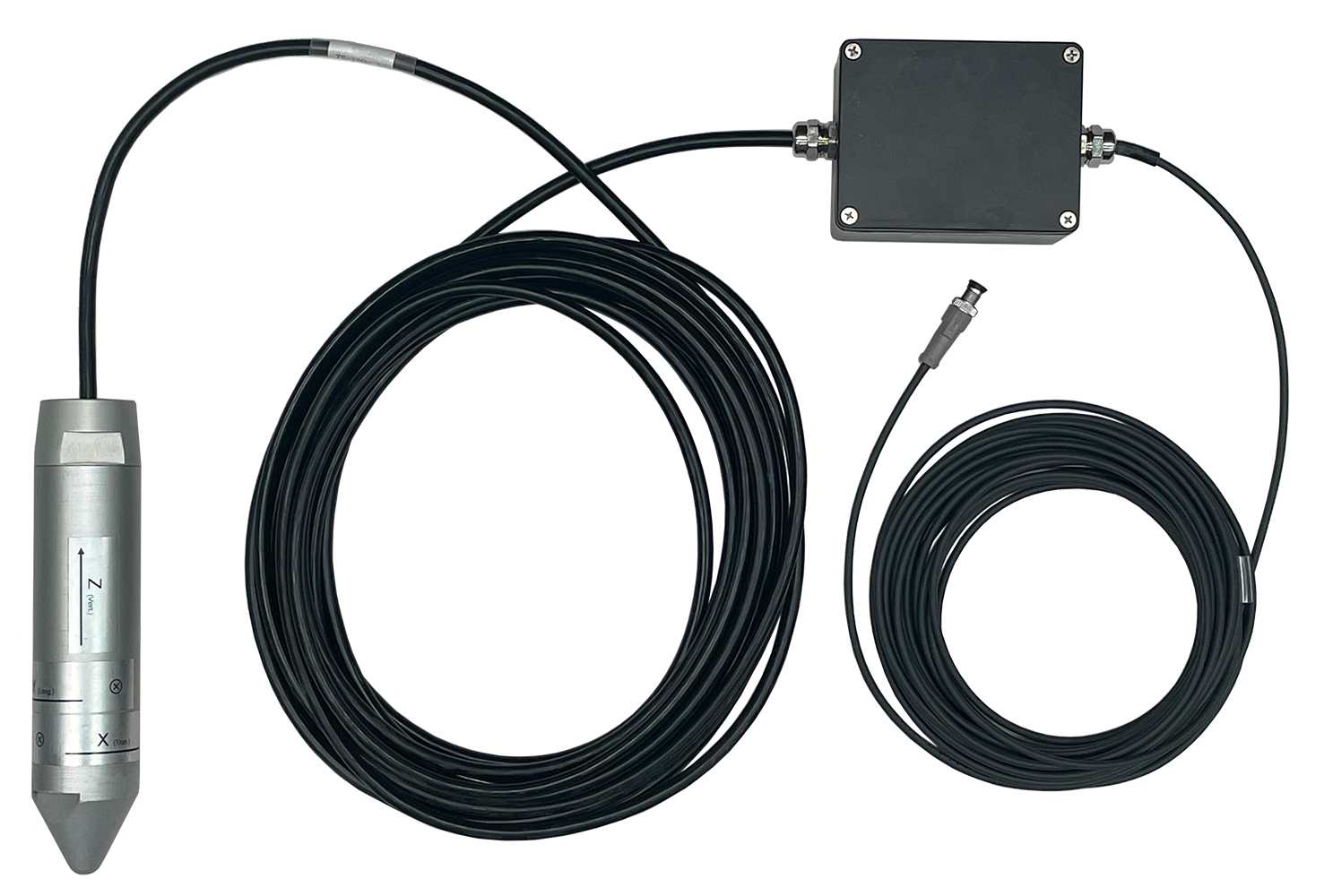
For projects requiring subsurface vibration measurements, a borehole geophone can be installed below grade to monitor vibration closer to underground infrastructure, foundations or other sensitive locations. These sensors can reduce uncertainties associated with surface-level vibration measurements when an underground structure needs to be protected.
For Borehole Monitoring, Consider Serviceability
For subsurface vibration monitoring, consider not only where the sensor needs to be installed, but also how the system will be serviced if the transducer becomes inaccessible or stuck once the project is complete.
Soft dB’s Smart Triaxial Borehole Geophone separates the buried sensor from the control electronics. The sensor can be installed underground using a rugged cable, while the electronics remain accessible at the surface for easier servicing and maintenance.
If a buried sensor cannot be recovered, only the transducer needs to be replaced and paired with the existing electronics, helping reduce replacement costs without replacing the complete measurement system.
Vibration Monitors and Seismographs
In the U.S. market, construction vibration instruments are also commonly referred to as vibration monitors or seismographs.
Modern systems combine vibration measurement with data acquisition, power management, storage and communications so vibration events can be monitored remotely rather than requiring manual data retrieval.
Monitoring Stations, Communications and Software
For unattended monitoring, the station needs to do more than just acquire vibration data.
A complete monitoring system should:
- Preserve measurements locally
- Communicate wirelessly to a server
- Provide live system status
- Apply project-specific criteria
- Generate alerts when warning or exceedance criteria are reached
- Record waveforms
- Provide access to current and historical data
- Simplify reporting
Built for Demanding Construction Environments
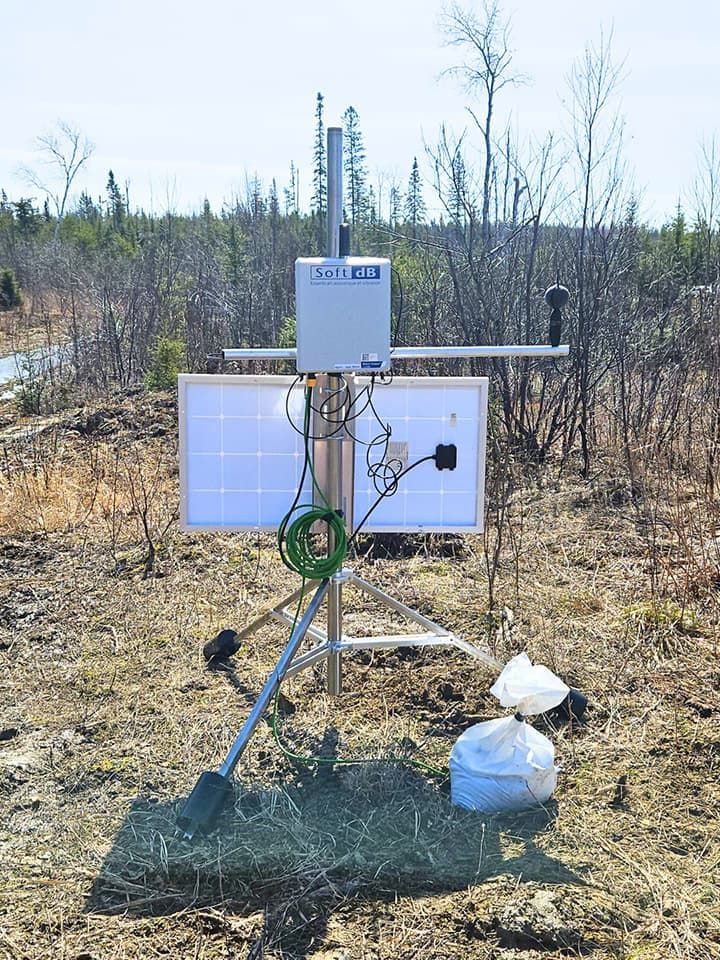
Soft dB’s Watch™ noise and vibration monitoring station was specifically designed for demanding construction environments, giving project teams one rugged system for multiple monitoring needs instead of managing separate instruments and platforms. Long battery life, local data logging and remote access help reduce site visits, avoid data gaps and simplify long-term monitoring.
How to Choose Construction Vibration Monitoring Equipment
The right equipment depends not only on what you need to measure, but also on how the system will be operated in the field.
| What to Evaluate | Why It Matters |
|---|---|
| Measurement range | Must cover expected vibration range without saturation |
| Frequency response | Must support the application and project requirements |
| Triaxial measurement | Captures vibration simultaneously in three directions |
| Local data storage | Prevent network outages from becoming data gaps |
| Remote communications | Enables unattended monitoring and station management without going in the field |
| Live system status and real-time data transfer | Confirms the station and sensors are operating |
| Warning and exceedance alerts | Enables faster response before exceeding the limit |
| Waveform recording | Provides the detailed event data needed to investigate exceedances and complaints |
| Power autonomy | Reduces interruptions and field visits |
| Remote diagnostics | Helps troubleshoot without going to site |
| Automated reporting and data export | Reduces manual reporting and creates a consistent project record |
| Automated sensor check | Helps ensure the instrument is functioning within specifications, without having to plan field visits |
Real-Time Vibration Monitoring, Alerts and Reporting
Know Immediately. Act Quickly.
Continuous monitoring creates an ongoing record of site conditions and helps project teams respond while vibration-generating work is still taking place.
Warning and exceedance thresholds can be configured according to project criteria.
When a threshold is reached, responsible personnel can review the vibration event, determine whether it corresponds to construction activity and decide whether work methods should be adjusted.
What Happens When a Vibration Limit Is Approached or Exceeded?
When a warning threshold is reached, the monitoring data can generally be reviewed before the project limit is exceeded.
If an exceedance occurs, the project response procedure may require:
- Notifying designated personnel
- Reviewing the waveform and measurement data
- Identifying the probable vibration source
- Modifying or temporarily pausing an activity where required
- Implementing mitigation measures
- Documenting corrective actions and validating their effectiveness
- Communicating with stakeholders
A useful alert should do more than say that a number was exceeded. It should provide enough insight to help the project team understand what happened and what to do next.
A sensor is only one part of a reliable monitoring system. For long-term or unattended projects, also consider what happens when communication is lost, how equipment can be checked remotely, how quickly teams can respond to an event, and how measurements and waveforms are documented over time.
- Local data logging — helps prevent data gaps during network outages.
- Remote sensor validation — helps reduce unnecessary site visits.
- Real-time alerts + waveform data — helps teams understand an event while work is still underway.
- Multi-parameter monitoring — lets vibration, Class 1 noise, blast overpressure and other project data be managed from the same system.
Watch™ brings these capabilities together in one monitoring platform, with local data logging, remote Sensor Check and diagnostics, configurable alerts, automated reporting and support for up to three Smart Sensors simultaneously.
What Should a Construction Vibration Monitoring Report Include?
A construction vibration monitoring report should make it easy to understand what was measured, where it was measured, which criteria apply, whether significant vibration events occurred, and how many exceedances were measured.
Depending on the project requirements, a report can include:
- Project and monitoring period
- Monitoring locations
- Sensor and instrumentation information
- Applicable vibration criteria
- PPV and frequency measurements
- Time-history or trend data
- Vibration event waveforms
- Warning and exceedance events
- Event timestamps
- Construction activities associated with significant events
- Actions taken following an exceedance
- Equipment status or data availability where required
For continuous monitoring projects, reports may summarize results over a defined period while retaining detailed waveform data for individual events that require further investigation.
Clear reporting helps project teams document compliance, investigate complaints and maintain a defensible record of site conditions.
With automated reporting, this process does not have to become another recurring field or administrative task.
Construction Vibration Monitoring with Soft dB
Built for Quick and Easy Deployment – and Defensible Data
Accurate vibration measurements are only part of the job. A construction vibration monitoring system also needs to stay online, preserve data, alert the right people and remain easy to manage for the duration of the project.
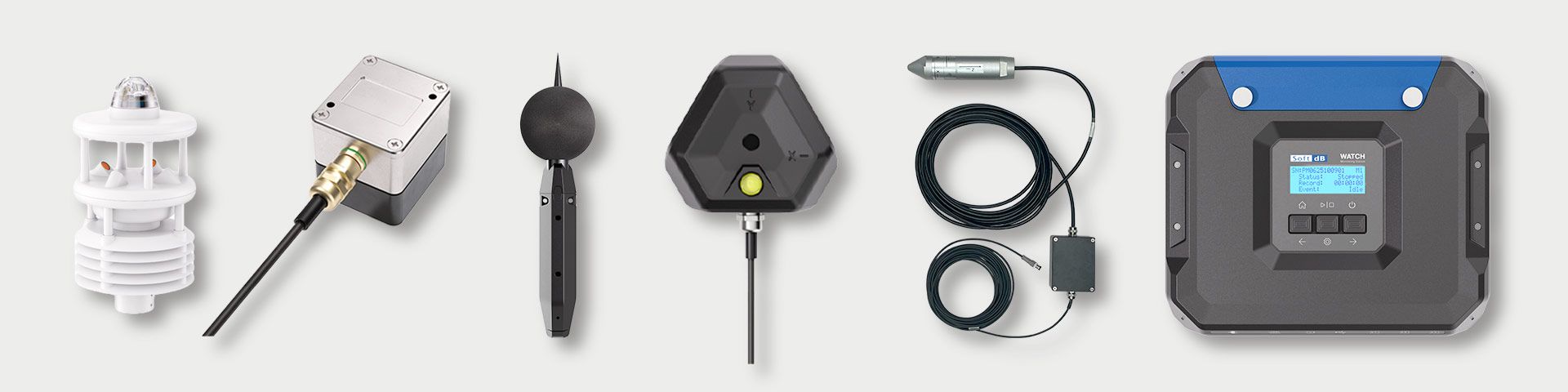
Soft dB combines Smart Sensors, the Watch Monitoring Station and a centralized Web Platform into one ecosystem designed for deployments ranging from temporary construction monitoring to long-term deployments.
From PPV and waveform measurements to real-time alerts, remote diagnostics and automated reporting, Watch brings the entire monitoring workflow into one system.
Geophone, MEMS & Borehole Monitoring — One Ecosystem
Construction projects may require different sensor technologies depending on vibration levels, frequency range and monitoring location. Soft dB supports triaxial geophones for precise ground vibration monitoring, MEMS sensors for strong-motion and structural applications, and borehole geophones for subsurface monitoring — all within the same Watch ecosystem and Web Platform. This lets project teams use the right sensor for each application without managing separate suppliers, platforms and subscriptions.
True Real-Time Visibility
The Soft dB Web Platform provides access to live measurements, station status, alerts, event information and historical data from anywhere. Teams can review conditions remotely rather than waiting for measurements to be retrieved later.
No Network? No Problem. No Data Loss.
Watch continuously logs data locally, independently of the cellular connection. If communications are temporarily interrupted, monitoring continues and stored data can synchronize once connectivity returns.
Know Immediately. Act Quickly.
Configure warning and exceedance criteria according to project requirements and notify the right people when attention is needed. Watch can also provide visual vibration alerts directly on site.
Remote Sensor Check — Verify System Status Without Going to Site
Smart Sensors include embedded signal processing and Sensor Check capabilities for remote validation. Remote status and diagnostics can help identify whether an issue comes from the sensor, station, communications or power before someone is sent to the field.
Modular Smart Sensors — Independent Calibration, Digital Output, Less Downtime
Soft dB Smart Sensors are plug-and-play measurement modules with embedded signal processing, remote performance verification, independent calibration and fully digital output. Sensors can be calibrated, serviced or replaced independently, then reconnected to Watch without station reconfiguration.
Noise and Vibration Often Happen Together — Monitor Both with One Station
When a project also requires Class 1 noise, blast overpressure or weather monitoring, additional Smart Sensors can be connected to the same Watch station and managed from the same Web Platform. Watch supports up to three Smart Sensors simultaneously for synchronized, validated data.
Built for Long-Term Field Deployment
Watch supports battery, AC and solar power configurations and offers up to 29 days of battery life depending on configuration. Local logging, remote diagnostics and OTA (over-the-air) updates help reduce unnecessary site interventions.
Automated Reporting and Defensible Records
Centralized measurement data, threshold events, waveforms and automated reports help teams maintain a clear, time-stamped monitoring history for compliance, complaints, exceedance review and stakeholder communication.
Why Soft dB for Construction Vibration Monitoring?
| Construction Monitoring Need | Soft dB Approach |
|---|---|
| Measure PPV and ground vibration | Smart Triaxial Geophone |
| Structural / strong-motion monitoring | Smart MEMS Vibration Sensor |
| Continuous unattended monitoring | Watch Monitoring Station |
| Respond quickly | Configurable real-time warning and exceedance alerts |
| Alert workers without connectivity | Local visual vibration alerts |
| Reduce false-positives | Frequency-dependent alert system |
| Verify equipment remotely | Sensor Check + Remote diagnostics |
| Reduce sensor service downtime | Independent Smart Sensor architecture |
| Monitor noise too | Add a Class 1 Smart Acoustic Sensor |
| Monitor multiple parameters | Up to three Smart Sensors per Watch |
| Centralize project data | Soft dB Web Platform |
| Simplify documentation | Automated reporting |
| Reduce field intervention | Remote access, diagnostics and OTA updates |
Blasting Too? Use Master Trigger™
For construction projects involving blasting, Master Trigger can automatically process vibration events, generate alerts and support automated post-blast summary reports within minutes.
This allows blasting vibration to be integrated into the same monitoring ecosystem rather than managed through a separate system.
Construction Vibration Monitoring FAQ
When Is Construction Vibration Monitoring Required?

Construction vibration monitoring may be required by project specifications, an agency, permit conditions or local requirements, or when a project raises concern on it’s impact on nearby structures and community.
It can also be implemented voluntarily when vibration-generating work could affect nearby structures, infrastructure or vibration-sensitive equipment.
What Is the Difference Between a Geophone and an Accelerometer?
A geophone measures vibration velocity directly and is commonly used for PPV-based construction monitoring.
An accelerometer measures acceleration and may be better suited to applications requiring different measurement ranges or frequency characteristics.
However, the acceleration generally needs to be converted to velocity to allow comparison to applicable standards. The right sensor depends on the expected vibration and project requirements.
What Is the Difference Between Ground Vibration and Building Vibration Monitoring?
Ground vibration monitoring measures vibration transmitted through soil or rock.
Building or structural vibration monitoring measures vibration at or directly on the structure being evaluated.
The appropriate measurement location depends on the receptor being protected and the applicable project criteria.
Do I Need Baseline Vibration Measurements or a Pre-Construction Condition Survey?
Not every project requires them.
However, baseline vibration measurements and condition surveys can be valuable when nearby structures or sensitive equipment are at risk, or when documentation of pre-existing conditions may be important for investigating future claims, such as cases where pre-existing cracks are present in nearby structures.
What Should a Construction Vibration Monitoring Report Include?
A vibration monitoring report can include:
- Monitoring locations
- PPV
- Frequency
- Event timestamps
- Applicable criteria
- Threshold exceedances
- Waveforms
- Corrective actions taken
The exact content should follow the project specifications and reporting requirements.
Can Noise and Vibration Be Monitored With the Same System?
Yes.
Construction activities such as pile driving, demolition and blasting can generate both noise and vibration.
Watch can combine ground or structural vibration with Class 1 noise monitoring and other environmental measurements using the same station and Web Platform.
Can Construction Vibration Monitoring Continue if Cellular Service Is Interrupted?
Not all monitoring systems handle communication outages the same way.
With Watch, measurements continue to be recorded locally even when cellular connectivity is unavailable. Once communications are restored, the data can be synchronized so that a temporary network interruption does not create a gap in the monitoring record.
For additional redundancy, data storage can also be enabled on the SD card to provide a backup copy of the measurement data.

Know Immediately. Act Quickly. Prove Compliance.
Construction vibration monitoring should provide more than a measurement level after the fact. With Watch, vibration measurements, waveforms, alerts, station status and reports are available within the same ecosystem — helping teams understand what is happening, respond when it matters and maintain a defensible monitoring record.
Get a system quote