In a dynamic and bustling city like Toronto, a certain amount of noise is to be expected as part of everyday urban life. The City of Toronto - Noise Bylaw, and especially the section regarding construction noise, aims to strike a balance between maintaining the city's construction activities and protecting the well-being of residents and visitors by establishing specific time restrictions, sound level limits, permits, exemptions and penalties for construction noise.
Need assistance with Toronto's construction noise bylaw?
Toronto's Construction Noise Bylaw Overview (Chapter 591)
Under Chapter 591 of the City of Toronto Municipal Code, construction noise refers to sounds generated by a range of construction-related activities. These include rehabilitation or maintenance work, demolition, land clearing, excavation, roadwork, concrete pouring, equipment installation, and any associated operations or the use of construction equipment.
A sound is considered a violation when it is clearly audible within the property boundary, particularly during restricted hours, or when it exceeds specific sound level limits as outlined in the bylaw.
The bylaw has undergone changes in recent years, notably during the COVID-19 pandemic. From April 2020 to October 2021, Ontario Regulation 130/20 temporarily overrode local bylaws, extending permitted construction hours from 6:00 a.m. to 10:00 p.m., seven days a week. This illustrates how municipal regulations can be quickly altered by provincial legislation.
As of 2024, updates to Chapter 591 include revised permitted hours and expanded restrictions on specific types of equipment. Bylaw enforcement is handled by Municipal Licensing & Standards officers, who assess compliance and issue penalties where necessary.
Given the evolving regulatory environment, construction noise monitoring has become increasingly important to ensure ongoing compliance and avoid costly disruptions.
Time Restrictions & Penalties
Daily Schedule Requirements
In Toronto, construction noise is permitted Monday to Friday from 7 a.m. to 7 p.m. and on Saturday from 9 a.m. to 7 p.m. Construction is not allowed on Sundays or statutory holidays. These rules apply to both commercial and residential construction projects, with a few exceptions for essential infrastructure work.
Violation Penalties & Enforcement
Construction outside permitted hours without an exemption can result in fines starting at $900, with court-issued penalties up to $100,000. Repeat violations may lead to escalating fines, daily penalties, or stop-work orders.
Bylaw enforcement officers investigate complaints by inspecting sites, measuring noise, and issuing fines or compliance orders as needed.
Residents can report noise violations through Toronto's 311 service request system by providing the location, type of activity, and time of disturbance. Supporting evidence like photos or recordings can help with enforcement.
Exemptions & Permits for Construction Noise
Automatic Exemptions (No Permit Required)
Certain types of work are exempt from the bylaw, including maintenance work conducted by utilities, emergency repairs, public infrastructure work, and some government work and construction projects It goes without saying that there are safety measures exemptions such as for paramedic services, for the Toronto Police Service and broadly for emergency vehicles. Bells or sirens required for the purposes of public safety including sirens when operated by the police, fire and paramedic services, or bells or whistles operated by rail or transit services are exempt.
Noise Exemption Permits (Application Required)
Construction work outside the permitted hours requires a noise exemption permit. Construction activities such as continuous concrete pouring and crane erection may qualify for exemptions if justified and approved. Conducting construction outside allowable hours without an approved exemption can result in fines starting at $900. In some cases, bylaw enforcement officers may also issue stop-work orders or additional penalties.
Application requirements vary depending on the nature of the project. However, all applicants must submit a completed online application through the city's official portal. Once submitted, the City of Toronto will review the application to determine its classification. This classification affects the fee amount, whether additional documentation is required, and any conditions that may be attached to the permit.
Violations, Penalties & Enforcement Process
How Violations Are Measured & Determined
Bylaw enforcement officers measure noise using calibrated Class 1 or Class 2 sound level meters, following industry standards for accuracy. Measurements are typically taken at a point of reception, often defined as 20 metres from the noise source or at the nearest property line. Measurements include details like time, duration, weather, and noise levels.
In Toronto, construction noise violations are determined using two main standards. For general compliance, noise must not exceed ambient levels by more than 5 dB. With exemption permits, noise must stay below 85 dBA at the nearest point of reception.
The City of Toronto also applies a reasonable person standard for unreasonable noise and excessive noise determination, meaning noise is considered a violation if it were deemed unreasonably loud or disturbing by an average person, even if it does not exceed a specific threshold.
Noise that is continuously heard for 10 minutes or more is more likely to be classified as a violation, especially when affecting indoor living areas during sensitive times like early morning or late evening. Intermittent or short-term noise may also be flagged if it is repetitive or tonal.
While Toronto's daytime noise limits are based on relative ambient levels, the World Health Organization (WHO) recommends a maximum of 55 dBA during the day for outdoor residential areas to protect public health. This highlights the importance of proactive noise control, especially in densely populated areas.
Violating noise bylaws can result in fines starting at $900, but the true cost may include project delays and community relations damage. Delays caused by enforcement action or lost community trust can far exceed the cost of upfront professional noise management and compliance planning.

Complaint & Investigation Process
Toronto residents can report noise violations through the 311 service request system by providing the location, type of activity, and time of disturbance. Supporting evidence like photos or recordings can help with enforcement.
Municipal Licensing & Standards officers investigate complaints using calibrated sound level meters and site inspections. Cases involving persistent noise or recidivism are prioritized over isolated incidents.
Bylaw violations may result in fines starting at $900, with court-issued penalties up to $100,000. Repeat offences can lead to daily fines and increased enforcement actions. Maintaining compliance through proper planning and documentation is essential to avoid penalties and project delays.
Additional Construction Site Noise Restrictions
Vehicle and Delivery Restrictions
Under Toronto's noise bylaw, noise resulting from loading, unloading, delivering, packing, unpacking, and otherwise handling any containers, products or materials is permitted Monday to Friday from 7 a.m. to 11 p.m. and on Saturdays, Sundays or statutory holidays from 9 a.m. to 11 p.m.
It is strictly forbidden to emit unnecessary noise from a stationary motor vehicle that is persistent noise, such as the sounding of a horn, engine revving, tire squealing, or any like sound that is clearly audible. Operations such as vehicle repairs are permitted Monday to Friday from 7 a.m. to 9 p.m. and on Saturdays, Sundays or statutory holidays from 9 a.m. to 9 p.m.
Furthermore, it is forbidden to emit any sound from a stationary motor vehicle exceeding 92 dBA at idle or 96 dBA at any engine speed greater than idle when measured at least 50 cm from the exhaust outlet using a sound level meter.
Equipment Operation Rules
Noise resulting from the use of power devices such as lawn mowers, leaf blowers and grass trimmers is permitted Monday to Friday from 8 a.m. to 7 p.m. and on Saturdays, Sundays or statutory holidays from 9 a.m. to 7 p.m.
For stationary sources like generators, compressors, and temporary construction equipment, noise levels must not exceed the ambient sound level by more than 5 dB at the nearest point of reception. In some cases, the City of Toronto may limit the operation of particularly noisy equipment to no more than one hour per day, especially in residential or noise-sensitive areas.
Proper placement and operation of equipment are essential for staying within compliance. Whenever possible, it is best to locate noisy machinery away from property lines, windows, and sensitive receptors such as homes, schools, or hospitals.
Regular equipment maintenance is also important for noise control. Poorly maintained machinery tends to generate more noise and is more likely to result in complaints. Operators should also avoid unnecessary idling and ensure that all equipment is used only during permitted hours.
Following best practices for equipment use not only helps to achieve regulatory compliance but also helps maintain positive relationships with nearby residents and businesses.
Compliance Strategies and Best Practices
Pre-Project Planning
Thorough pre-project planning is essential to ensuring compliance, minimizing risks, and avoiding delays before construction begins. This stage often includes baseline noise measurements, impact assessments, permit applications, and community notification procedures.
A proper site assessment should evaluate potential noise impacts on surrounding areas and identify high-risk activities. Based on the findings, a noise mitigation plan should be developed to outline specific measures and equipment needed to stay within bylaw limits.
Ongoing Compliance Management
The negative effects of elevated noise on human health are well documented and impact various aspects of human life. According to Health Canada, continued exposure to noise may lead to hearing loss as well as mental health conditions. Thus, a construction noise management plan is essential to mitigate noise issues and to ensure ongoing compliance with Toronto's noise bylaw.
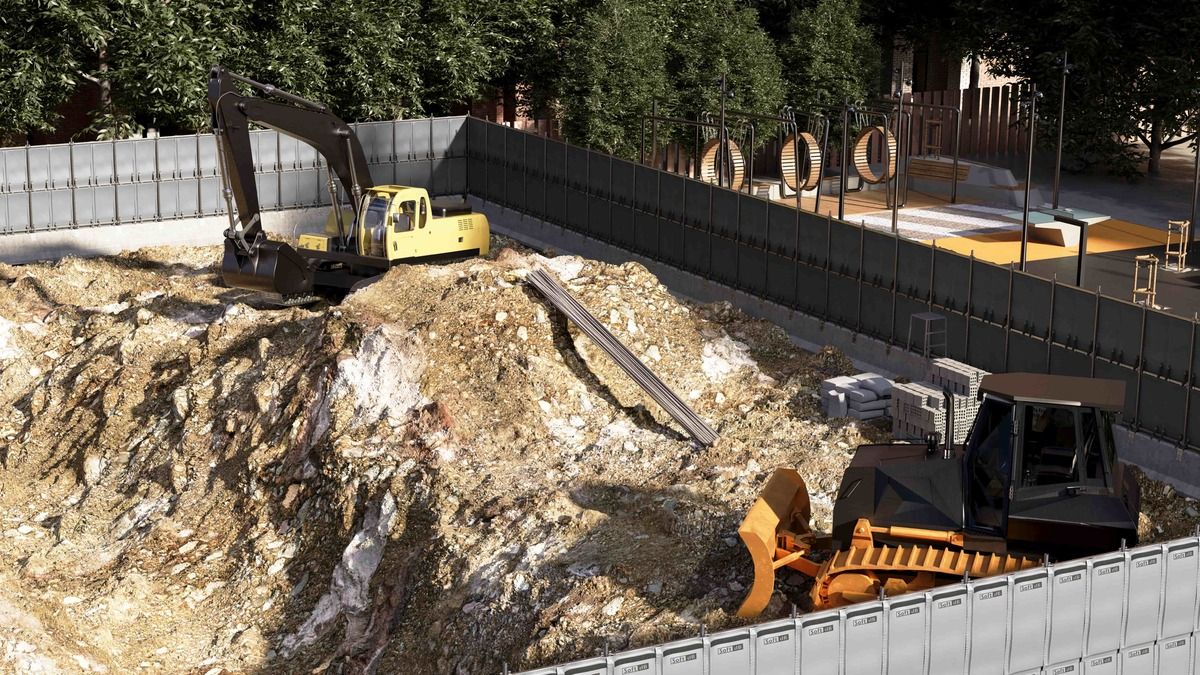
Engineering controls are the main and most effective strategies for reducing noise in construction. Soft dB's temporary construction noise barrier reduces noise by physically blocking the noise between construction activities and nearby receptors.
To be effective, barriers must be tall enough to break the line of sight, dense enough to block sound, fully sealed at the connection points (no openings or gaps between modules), and provide full coverage around noisy activities. Our barriers are modular, weather-resistant, durable, and allow for easy relocation as construction processes shift.
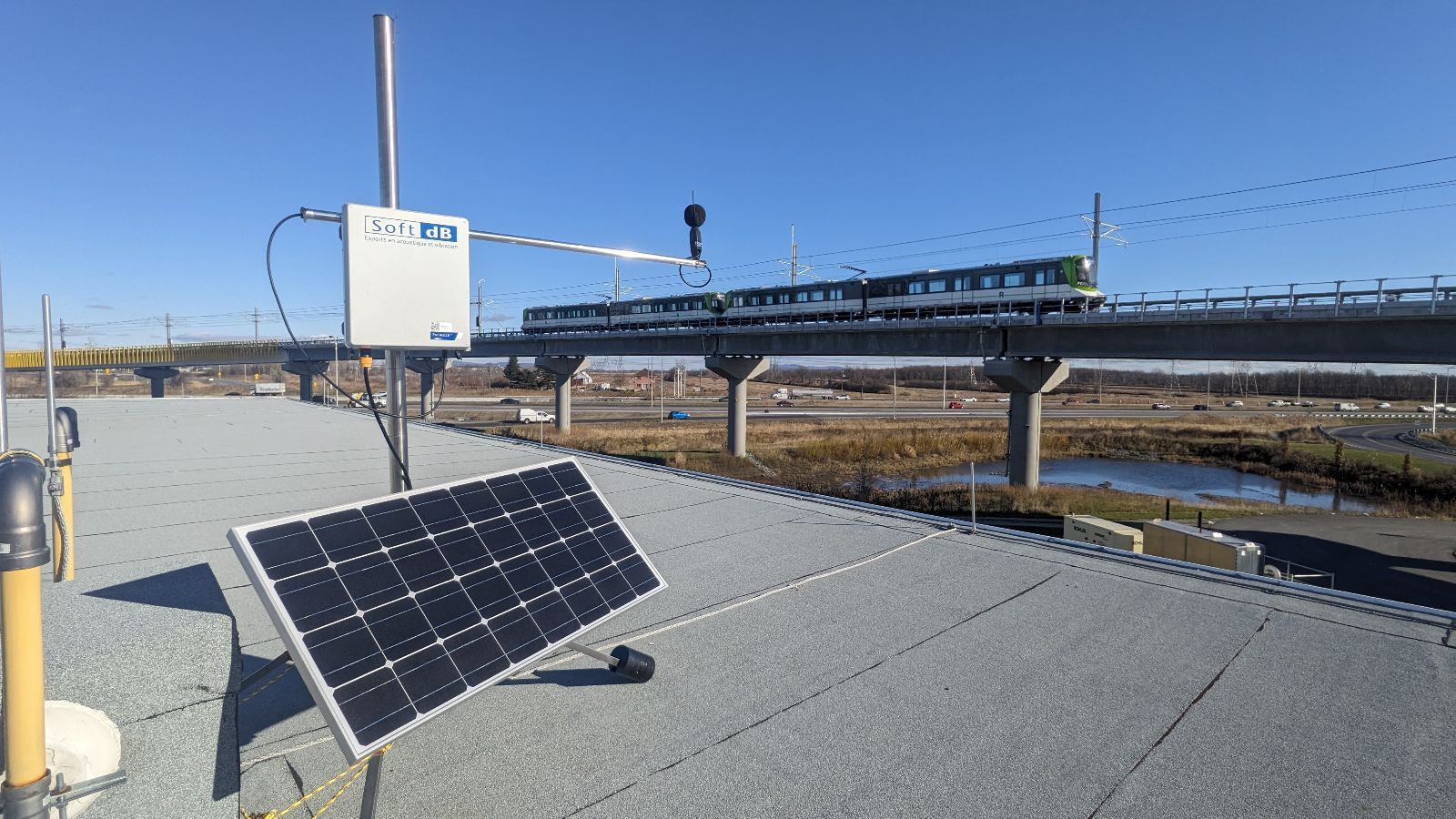
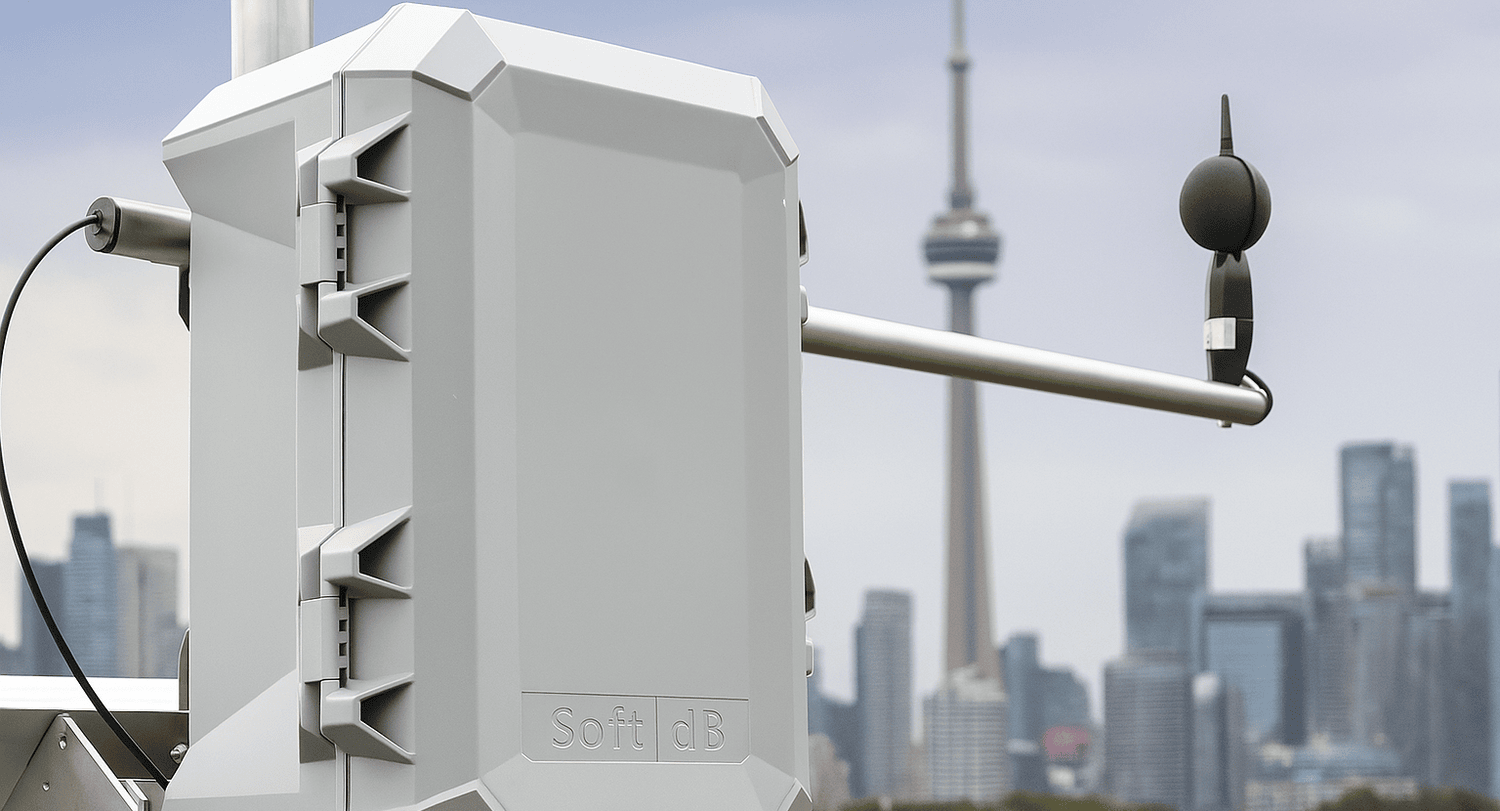
Monitoring noise continuously is also crucial, as noise levels fluctuate daily due to factors like new equipment, processes, and weather conditions. Implementing continuous noise monitoring systems can alert site managers when noise approaches or exceeds acceptable thresholds. Soft dB provides real-time construction noise monitoring solutions that give project teams instant insights and peace of mind.
In addition to technical controls, community relations strategies and complaint response protocols can be implemented to improve relations with Toronto residents and thus limit complaints. Proactive communication is always a win.
It is worth mentioning that staying updated via the City of Toronto website is a good practice not to miss any of the city's noise bylaw changes.
Protect Your Construction Projects from Costly Bylaw Violations
Engaging noise experts is more than a competitive advantage, it becomes essential when your project involves high worker or community noise exposure, urban construction sites, strict regulatory limits, or ongoing community complaints.
With increasing enforcement, stricter penalties, and rising noise-related complaints in Toronto, a proactive noise management plan is critical to winning bids, maintaining community trust, and avoiding costly delays or violations.
Soft dB sets the industry benchmark for professional noise and vibration management in construction. We deliver unmatched expertise and results in reducing and controlling construction noise.
Our consulting services include comprehensive noise assessments, custom mitigation strategies, and full regulatory compliance support. Our advanced monitoring solutions provide real-time noise level tracking, analytics dashboards, and automated compliance reporting, ensuring your project stays on track and within legal limits.
Need assistance with Toronto's Construction Noise Bylaw?

Construction Noise Bylaw Toronto FAQ
What are the exact permitted hours for construction work in Toronto?

In Toronto, construction noise is permitted Monday to Friday from 7 a.m. to 7 p.m. and on Saturday from 9 a.m. to 7 p.m. Construction is not allowed on Sundays or statutory holidays. These rules apply to both commercial and residential construction projects, with a few exceptions for essential infrastructure work.
How far in advance do I need to apply for a noise exemption permit?
You must apply for a noise exemption permit at least 28 days before the planned start date of the work requiring the exemption. This advance time allows the City of Toronto to review your application, notify nearby residents if necessary, and assess the justification for extended or off-hour work.
What's the penalty if construction is being conducted outside permitted hours?
If a company is found to be conducting construction during prohibited hours without an exemption, they could face fines of $900 or more. Enforcement officers can also issue additional penalties or stop-work orders in some cases.
What's considered "continuous concrete pouring" for exemption purposes?
Continuous concrete pouring refers to work such as slip-forming, deck pour or pre-pour operations that cannot be interrupted once the operations have started. These activities may be eligible for noise exemptions.
What construction activities are exempt from the noise bylaw?
Certain types of work are exempt from the bylaw, including emergency repairs, public infrastructure work, and some government construction projects. Also, continuous concrete pouring and crane erection may qualify for exemptions if justified and approved.
How much does a noise exemption permit cost and how long does it take to process?
As of the latest update, the application fee for a noise exemption permit in Toronto is approximately $100–$600, depending on the activity, scope and duration. Processing usually takes about three to four weeks, assuming the application is complete and no additional documentation is needed.
What happens if a resident files a noise complaint against my construction site?
If a resident files a noise complaint, a bylaw enforcement officer may visit the site to monitor sound levels, verify the time of activity, or validate a noise exemption permit if applicable. If you are found violating the bylaw, you could receive a warning, fine, or even face legal action depending on the situation.
How close to residential areas can I work during permitted hours?
You can conduct construction near residential areas during the permitted hours, but you are still expected to minimize noise as much as possible. Excessive noise, even within the allowed hours, can still lead to complaints or scrutiny from bylaw enforcement officers.
What's the maximum decibel level allowed under a noise exemption permit?
The City of Toronto does not specify a strict decibel limit in exemption permits, but specific limits and monitoring requirements may be outlined in the terms of an individual permit.
How do I prove my work qualifies as "government construction" for exemption?
To prove your project qualifies as government construction, you will need to provide documentation from a municipal, provincial, or federal agency confirming the work is publicly funded or commissioned.