A Goldman Sachs Case Study
Sound Masking in Low Plenum Ceilings
How Soft dB solved a hidden infrastructure constraint inside Goldman Sachs' 4th-largest global office, without touching the ceiling.
CLIENT Goldman Sachs · LOCATION Salt Lake City, UT · SCOPE Floors 4–7 & 14 · BUILDING 111 S. Main (SOM, LEED-certified)
The Building
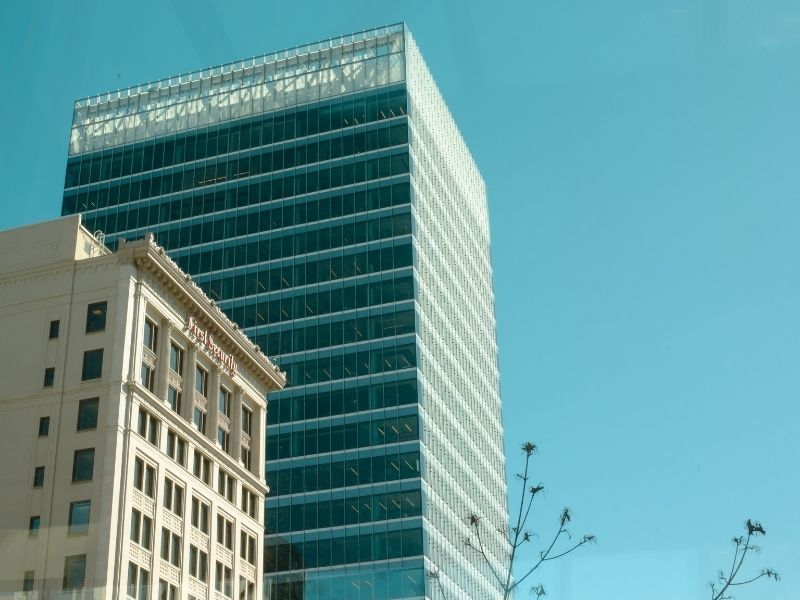
111 Main isn't a typical office tower. Designed by Skidmore, Owings & Merrill, the 24-story LEED-certified landmark in downtown Salt Lake City cantilevers over a performing arts theater starting at the fifth floor, architecturally striking, technically unforgiving.
It's also where Goldman Sachs runs one of its most significant North American operations, with roughly 2,500 employees on-site every workday. Open trading-style floors. Glass-walled meeting rooms. Collaborative work zones.
Conversations are happening everywhere, all the time.
In that environment, acoustic performance isn't a design preference. It's an operational requirement.
The Problem Most Teams Don't Catch Until It's Too Late
Modern commercial construction has a dirty secret: plenum space is disappearing.
Ceiling cavities that used to offer generous clearance are now packed with mechanical, electrical, and data infrastructure. Conventional flush-mount speakers need room to breathe. At 111 Main, that room simply didn't exist across the Goldman Sachs floors.
Forcing a standard speaker layout into a constrained plenum means one of three outcomes: compromised positioning, uneven coverage, or visible hardware that no architect or client will sign off on.
“The ceiling wasn't cooperating. So we made it part of the solution.”
The Solution
Rather than working around the building, Soft dB worked with it, deploying the SMS-HDN hidden speaker across all five floors, managed by a single RL96 multizone controller.
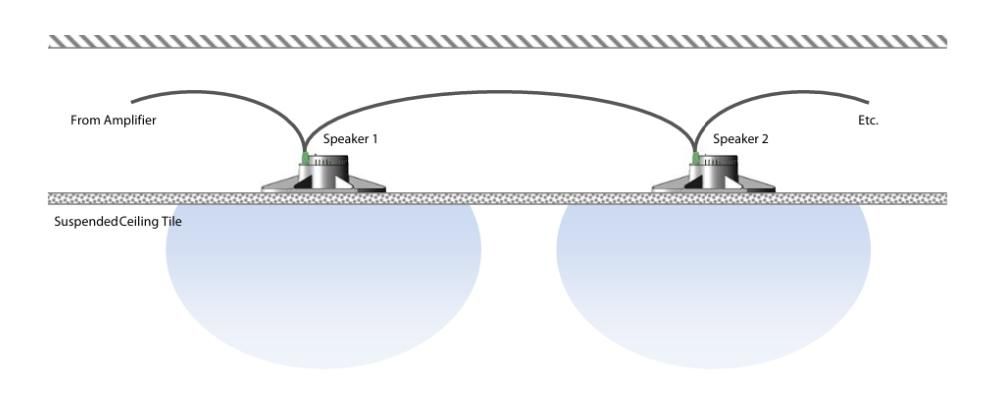
SMS-HDN · Hidden Plenum-Mount Speaker The SMS-HDN mounts directly to the back of an existing ceiling tile, with no cutouts, no grilles, and no visible hardware. The tile itself becomes the radiating surface, producing smooth, diffuse coverage across the entire zone. Ideal for constrained plenums where conventional speakers simply won't fit.
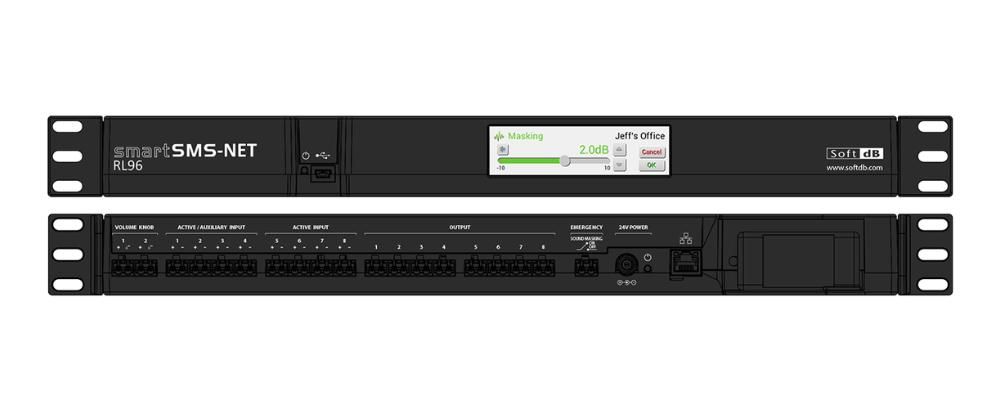
RL96 · Multizone Sound Masking Controller A five-floor system with 2,500 occupants and varying acoustic profiles across every floor isn't a plug-and-play install. The RL96 manages up to 8 independent zones from a single unit, each with its own EQ, adaptive masking response, and integrated paging/BGM. Facility teams can adjust levels by zone directly from a built-in touchscreen, no technician required.
The Deployment
Every floor presented a distinct acoustic challenge. The RL96's per-channel architecture made it possible to tune each zone independently, accounting for differences in ceiling height, furniture density, partition layout, and occupancy type.
| Floor | Challenge | Solution |
|---|---|---|
| 4 | Limited plenum depth throughout | SMS-HDN across full floor plate |
| 5 | Cantilever begins, constrained ceiling cavity | SMS-HDN, dedicated zone |
| 6 | Variable acoustic profile | SMS-HDN, independent EQ tuning |
| 7 | Masking + paging + BGM required | Integrated through shared SMS-HDN infrastructure |
| 14 | Upper-floor separation from lower zones | RL96 channel allocation adjusted accordingly |
What 2,500 People Experience, Without Knowing It
The best sound masking system is one nobody notices. That's the benchmark.
At Goldman Sachs' 111 Main floors, the acoustic environment now matches how the space is actually used:
- Speech privacy where sensitive conversations happen
- Distraction reduction across open collaborative floors
- Acoustic comfort throughout; no hotspots, no dead zones, no uneven coverage

Why This Matters for Your Next Project
If you're specifying, designing, or managing a space with shallow plenum depths, open floor plans, or mixed-use acoustic zones, the constraints at Goldman Sachs aren't unusual. They're increasingly the norm.
Soft dB designs and manufactures adaptive sound masking systems for complex commercial environments across North America.